
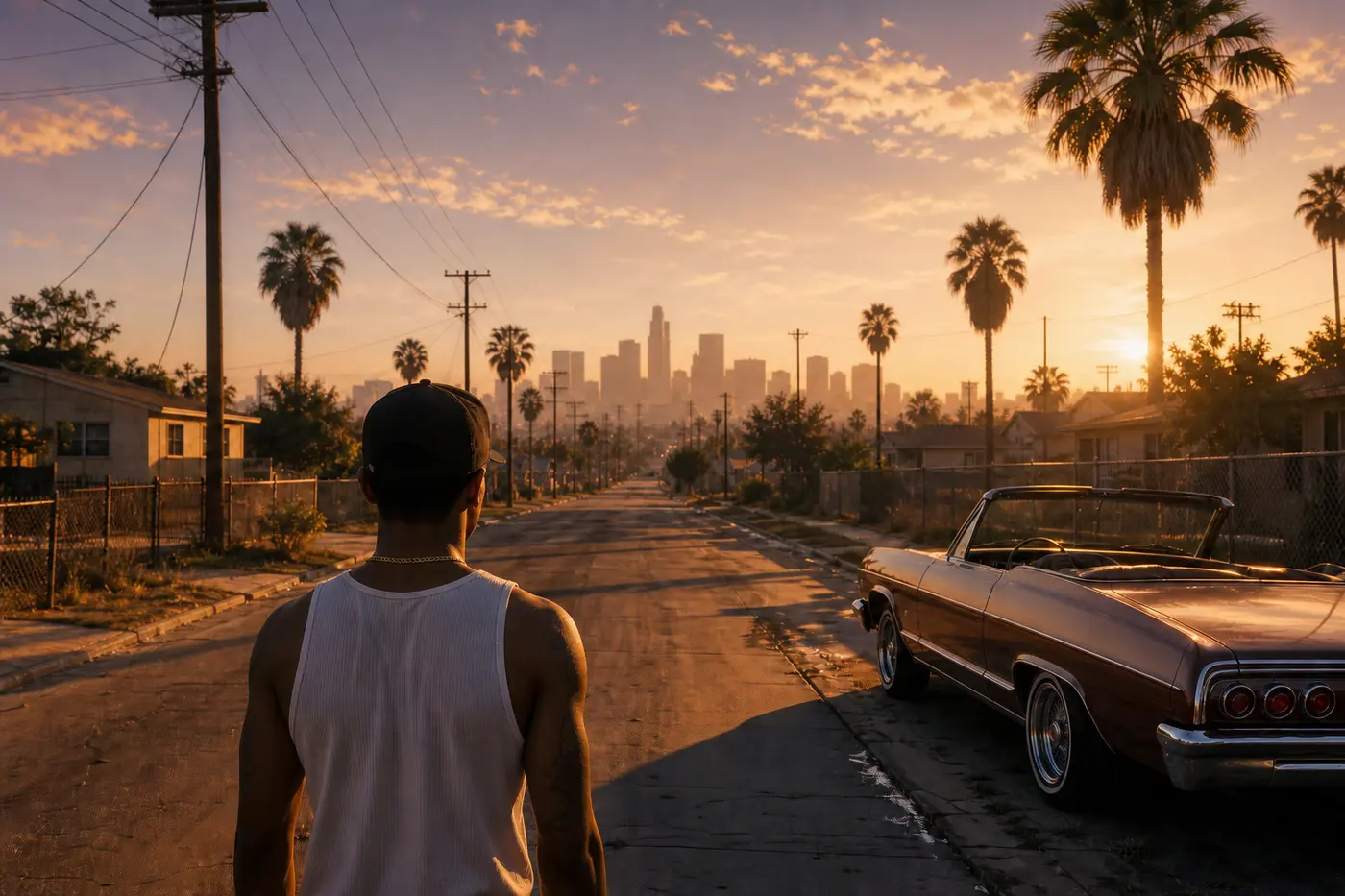
On October 26, 2004, Grand Theft Auto: San Andreas landed on PlayStation 2 and blew past every limit the series had set. Where GTA III and Vice City each fit inside a single city, Rockstar North delivered an entire state: three metropolises, a countryside, a desert, and the story of a neighborhood kid coming home. Twenty years later, San Andreas is still, for many, the most beloved GTA of all. Here’s why.
The State of San Andreas: three cities, one world
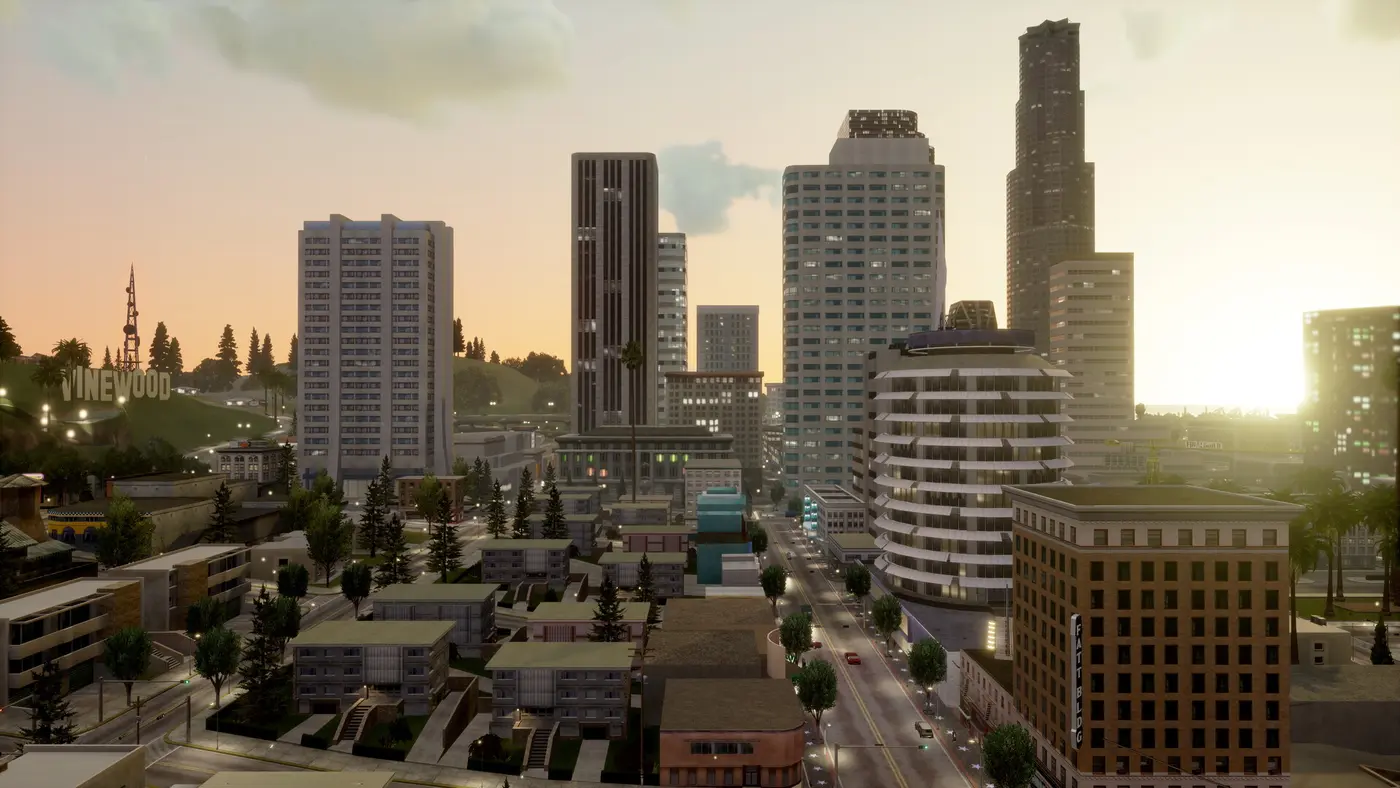
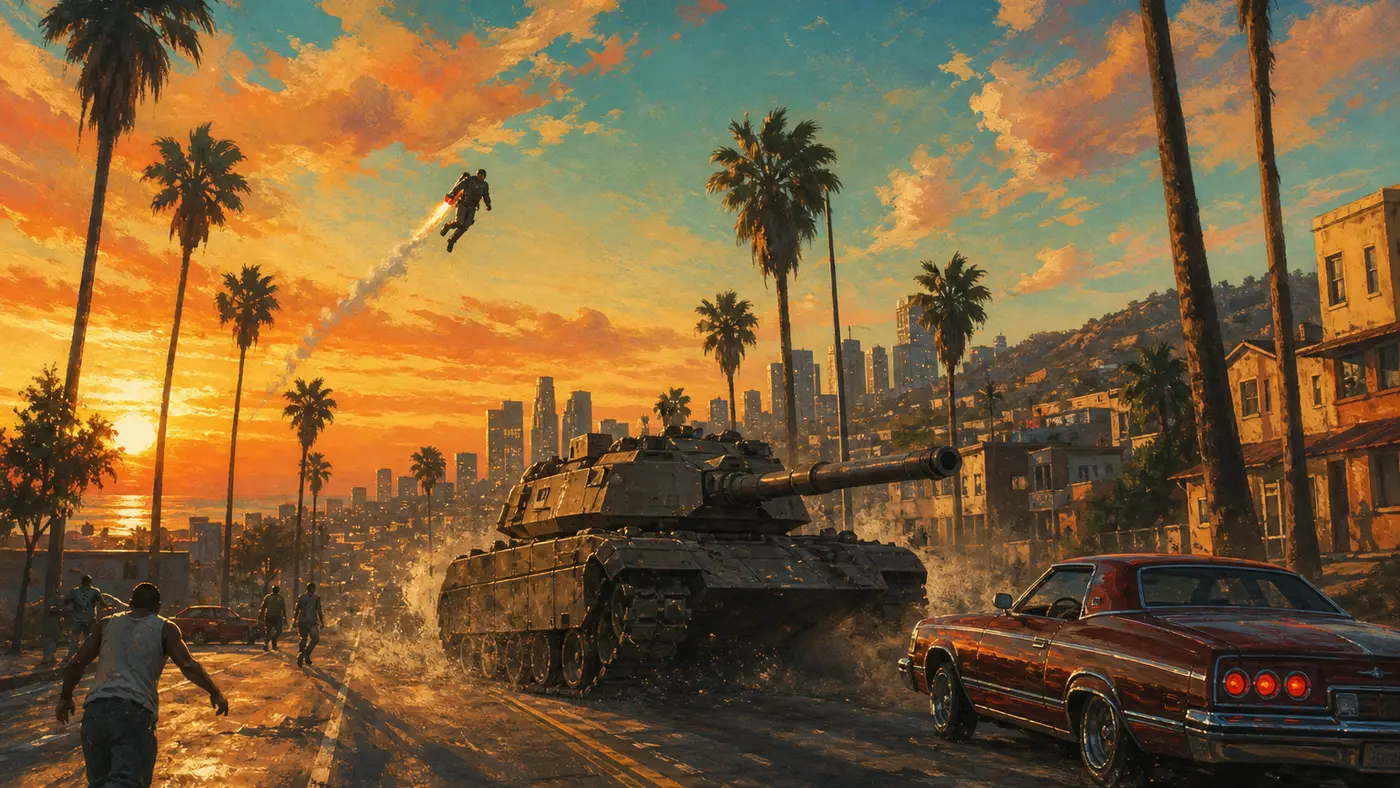
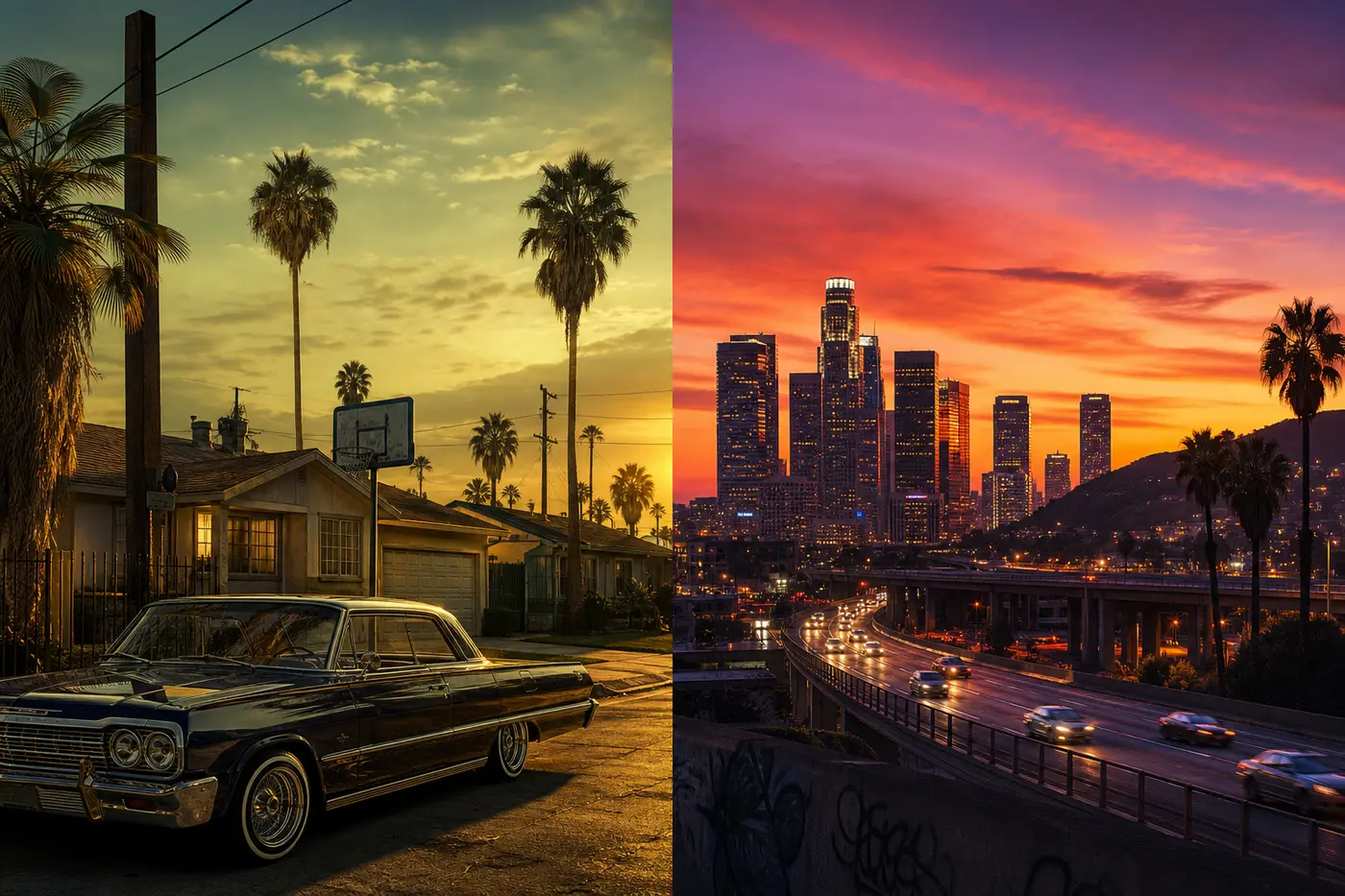
The core idea was dizzying for 2004: don’t set the game in a single city, but across an entire fictional state, San Andreas, inspired by California and Nevada, during the racial tensions of 1992. It’s home to three major cities, each modeled on a real one: Los Santos (Los Angeles and its gangsta culture), San Fierro (San Francisco, its coastline and steep streets), and Las Venturas (Las Vegas and its casinos). Between them stretch the countryside, small towns, a military base, and a desert.
It was, by far, the biggest map the series had ever offered, and one of the biggest in gaming at the time. More importantly, it gave a real sense of travel: going from the dusty heat of Los Santos to the foggy hills of San Fierro changed the mood entirely.
CJ and Grove Street: back to the hood
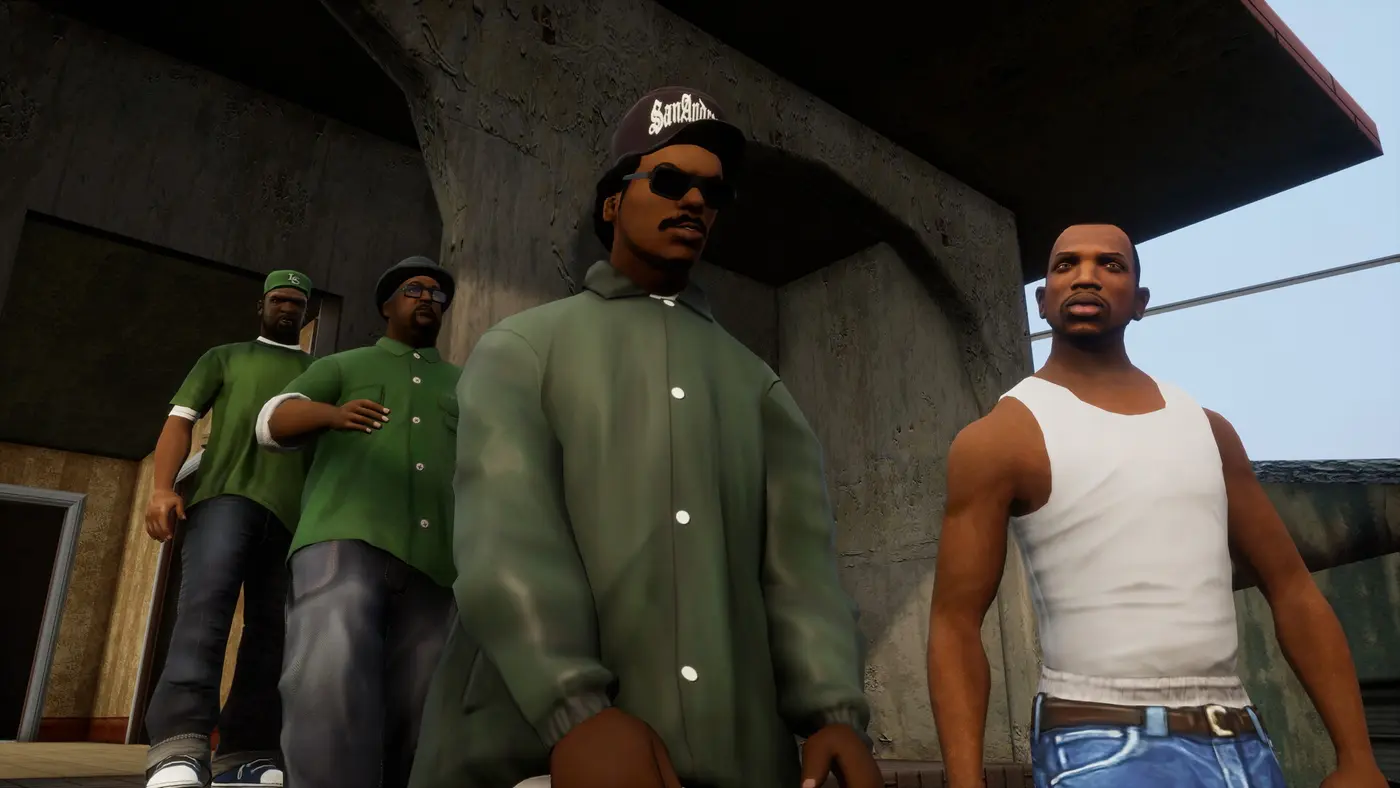
The hero is Carl “CJ” Johnson. After five years in Liberty City, he returns to Los Santos for the funeral of his mother, gunned down in a shooting. He finds a neighborhood in ruins, an older brother, Sweet, who resents him for leaving, and his childhood gang, the Grove Street Families, gutted by drugs and their rivals, the Ballas.
From that wake grows a sprawling, dozens-of-hours saga: reclaiming turf, betrayals, a rise all the way to the casinos of Las Venturas, all of it under the thumb of crooked cops led by Officer Tenpenny, voiced by Samuel L. Jackson. Where San Andreas sets itself apart from GTA V is in that tone: a raw street drama fueled by South Central cinema and gangsta rap, grittier than the irony of its successors.
The innovations that changed everything
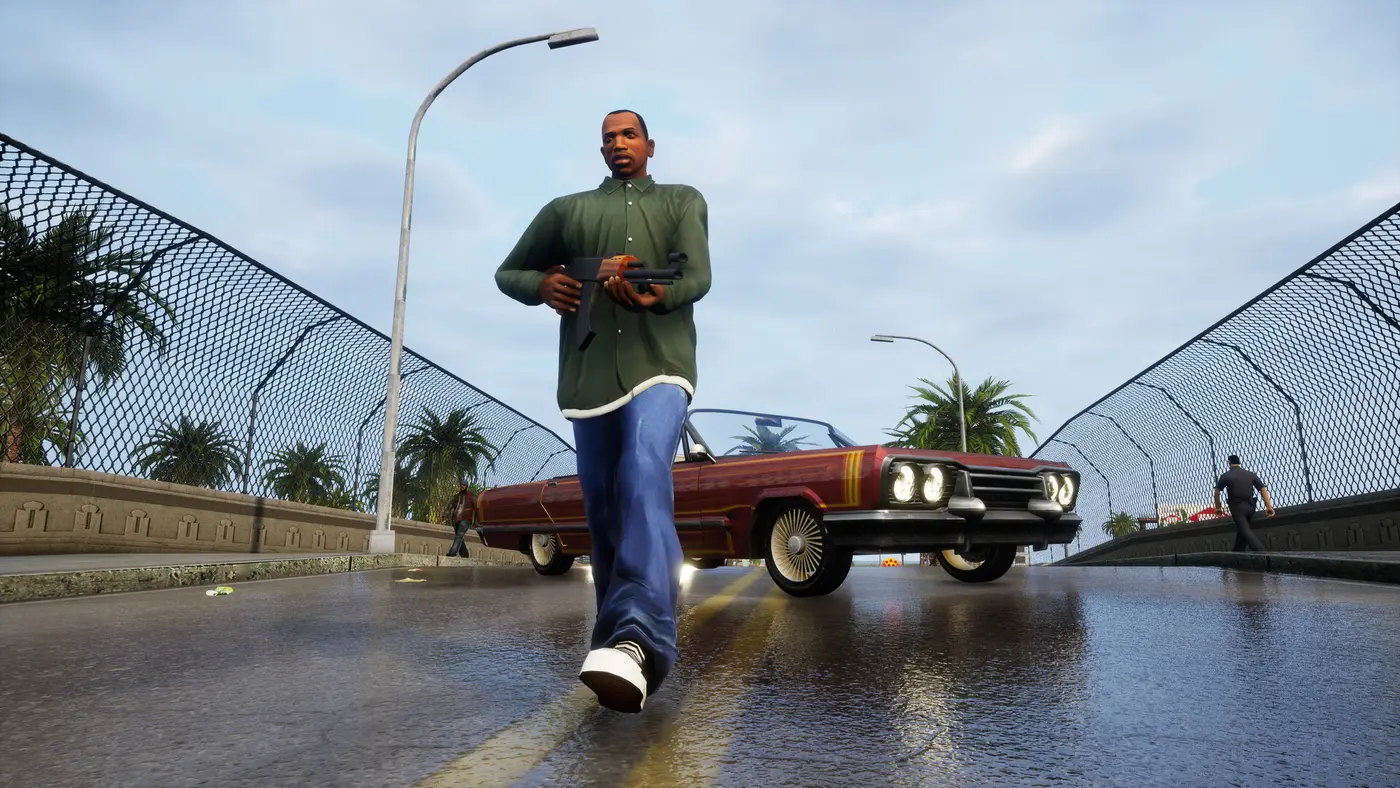
Technically, San Andreas pushed the PlayStation 2’s RenderWare engine to its very limits. But its real revolution lay elsewhere: in the depth of simulation. For the first time, CJ’s body wasn’t fixed. You had to feed him, take him to the gym, keep him from getting fat or wasting away, build up his stamina and his weapon skills. You could change his haircut, his clothes, his tattoos, and even boost his respect or his sex appeal.
Add in gang warfare to control territories on the map, full-blown aviation (complete with a pilot’s license and a jetpack), swimming that was finally possible, and dozens of drivable land, air, and sea vehicles, and you get a sandbox of unprecedented richness. Many of these ideas still run through the series to this day.
| San Andreas innovation | What was new in 2004 | Legacy in the series |
|---|---|---|
| Three cities plus the countryside | The biggest GTA map of its time | The regions of GTA V and Leonida |
| RPG-style stats | CJ’s body and skills evolve | The skills in GTA V |
| Customization (clothes, tattoos, weight) | The first truly moldable GTA avatar | The GTA Online character creator |
| Gang warfare and territories | Conquering zones on the map | Zone-control systems |
| Full aviation | Planes, pilot’s license, jetpack | The skies of GTA V |
| Swimming and diving | CJ no longer drowns | Standard since 2004 |
A soundtrack and cast that became legendary
You can’t talk about San Andreas without its radio. Eleven stations cover the gangsta rap, funk, soul, rock, and country of the early 1990s, from Radio Los Santos to Bounce FM by way of K-DST. That soundtrack, dialed in perfectly to its era, does as much for the immersion as the map itself.
The voice cast matched that ambition, rare for a 2004 game: Young Maylay voices CJ, surrounded by Samuel L. Jackson, Ice-T, Chris Penn, and Peter Fonda. This care for the writing and the voice acting laid the groundwork for the narrative ambition Rockstar would go on to cultivate, from GTA IV to why GTA V is still going strong since 2013.
Hot Coffee: the scandal that changed game ratings
In 2005, San Andreas found itself at the center of the biggest controversy in Rockstar’s history. A mod called Hot Coffee unlocked a sexually explicit minigame that was present in the files but cut from the final game. The discovery sparked a political uproar in the United States. The result: on July 20, 2005, the ESRB re-rated the game Adults Only, the damning category that gets a game pulled from the shelves of many retailers.
Rockstar and Take-Two had to release a fixed version, absorb the game’s temporary removal, and then, years later, settle a $20 million class-action lawsuit (2009). The affair went beyond San Andreas alone: it left a lasting mark on how the industry handles hidden content and age ratings.
San Andreas today: the remaster and the legacy
In November 2021, San Andreas returned in the Grand Theft Auto: The Trilogy Definitive Edition, a remaster handed to the studio Grove Street Games. The launch turned into a fiasco: bugs, broken lighting, unsightly character models, misspelled signs, to the point where the PC version was pulled for a while. It would take years of patches, up to a major 2024 update that notably restored the classic lighting, before this edition became a recommendable way to discover the trilogy again.
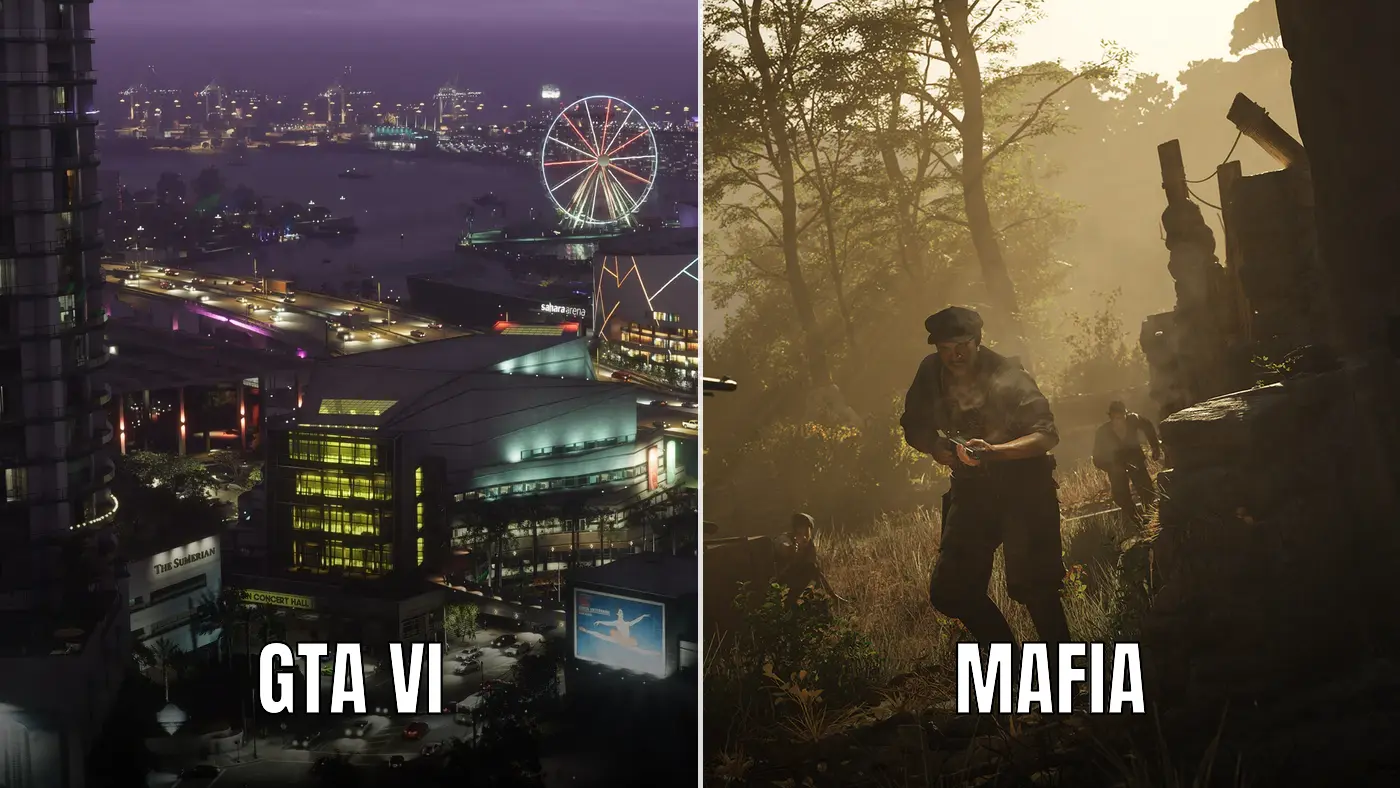
Beyond the remaster, San Andreas’s most enduring legacy lies elsewhere. The game fueled years of modding and amateur multiplayer (SA-MP, MTA), the direct cultural blueprint for the GTA RP that runs on GTA V today. And its DNA still shows up in every new installment: the region-map, the customization, the gang life. To measure how far things have come, you can compare San Andreas to GTA 6: from the Los Santos of 1992 to the Leonida of the brand-new Grand Theft Auto VI, the line is direct. And to put it all in context, here’s every GTA game in order and the story of Rockstar’s beginnings.
Comments
Be the first to react.