
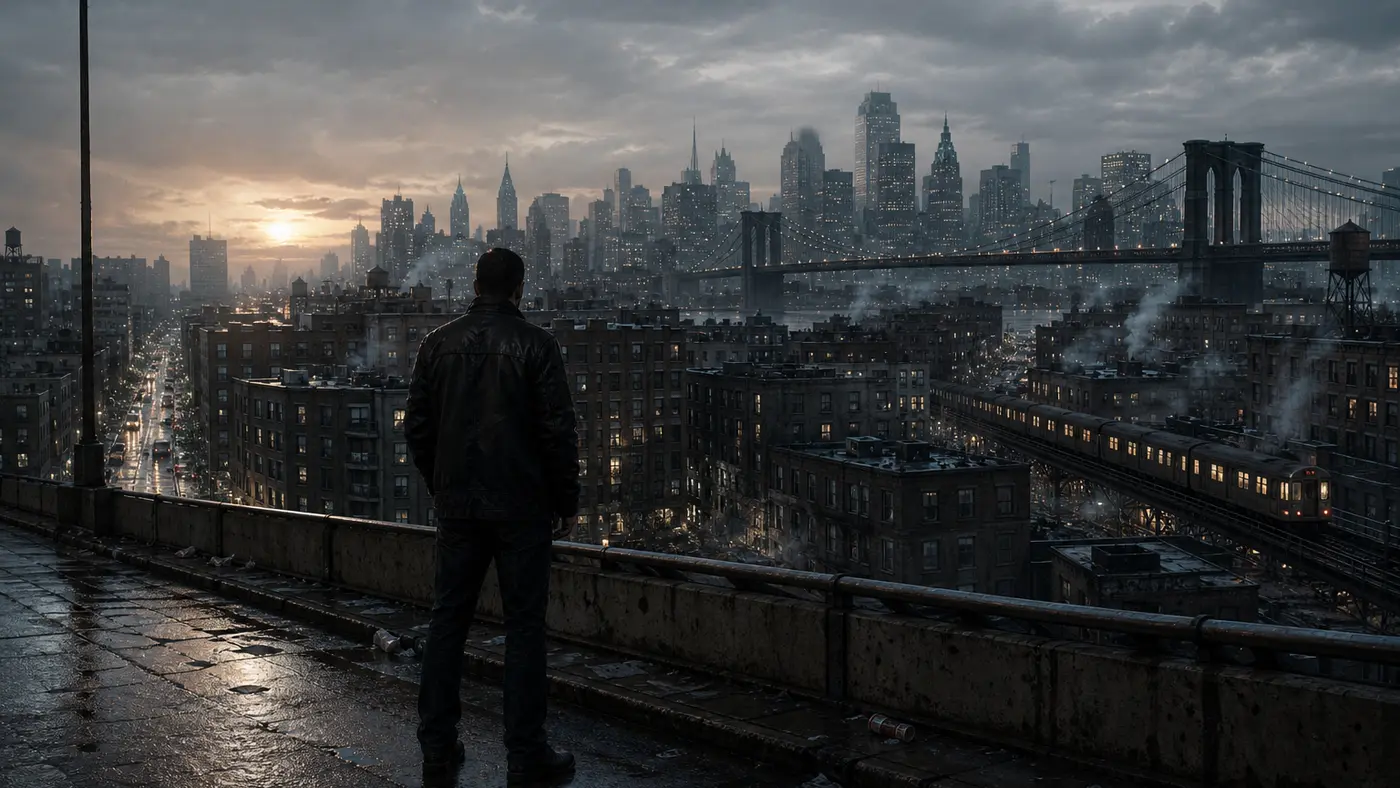
On April 29, 2008, Grand Theft Auto IV pushed the series into the HD era. The first open-world GTA built on the RAGE engine and paired with Euphoria physics, it dropped a Liberty City modeled on New York around Niko Bellic, an immigrant chasing an American dream that keeps slipping out of reach. A Metacritic score of 98 and shattered sales records: a milestone that eighteen years haven’t erased.
Liberty City, the most believable New York of 2008
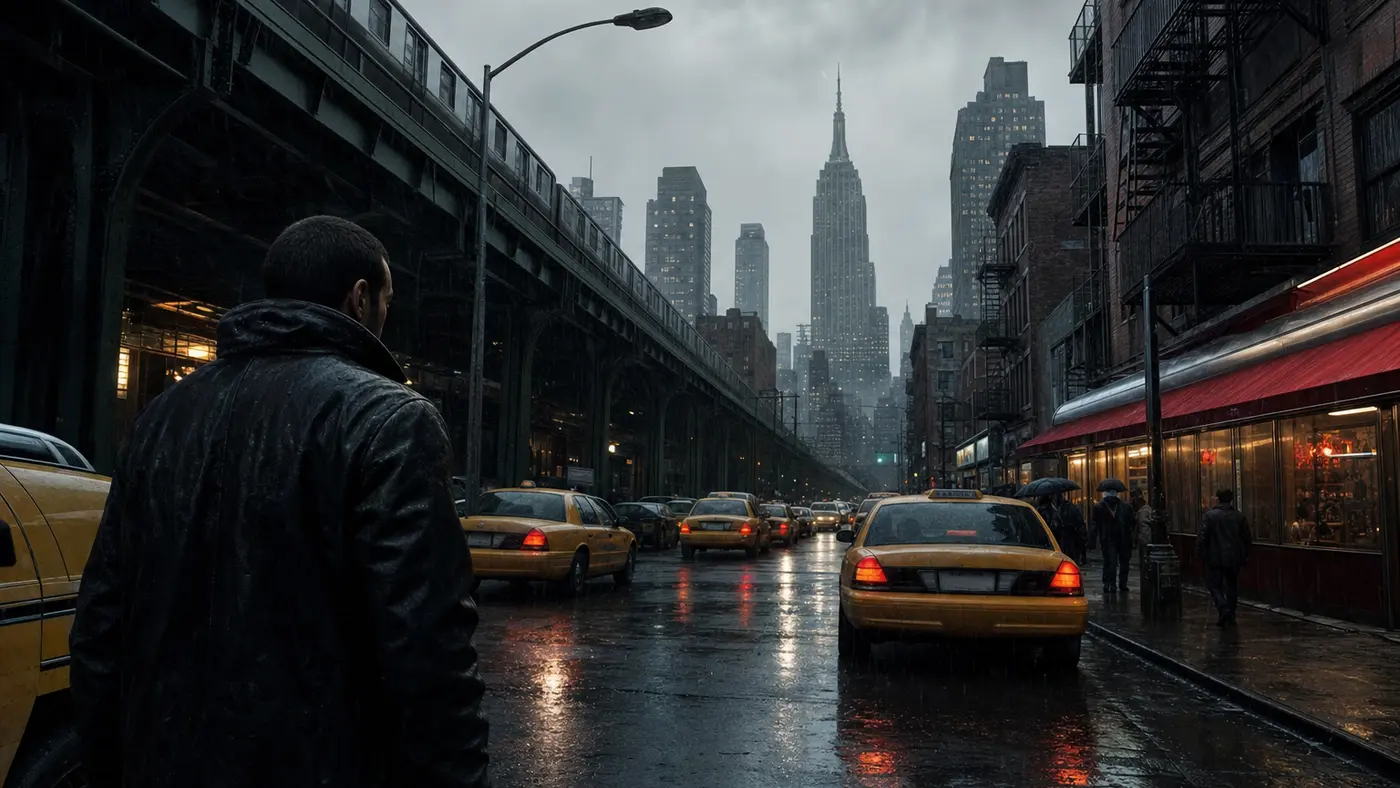
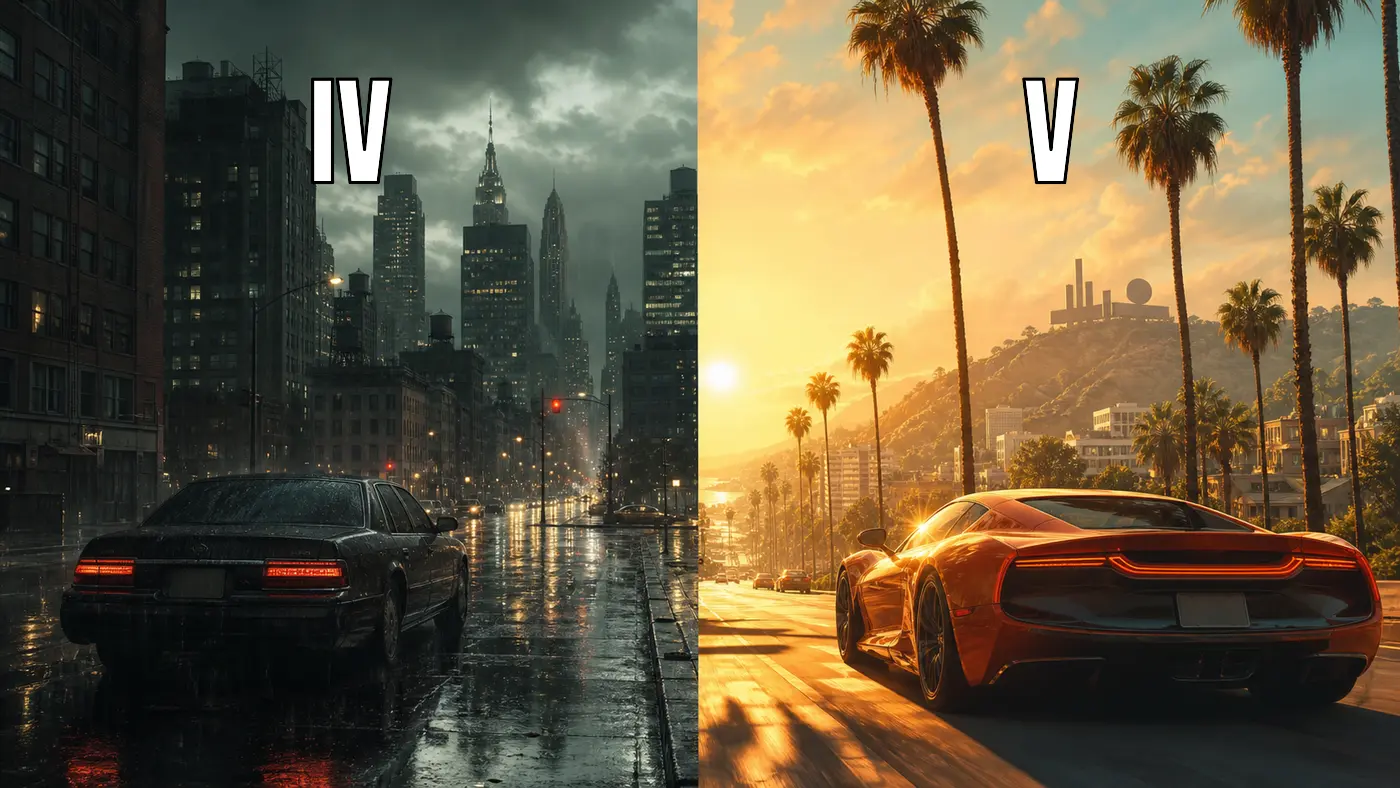
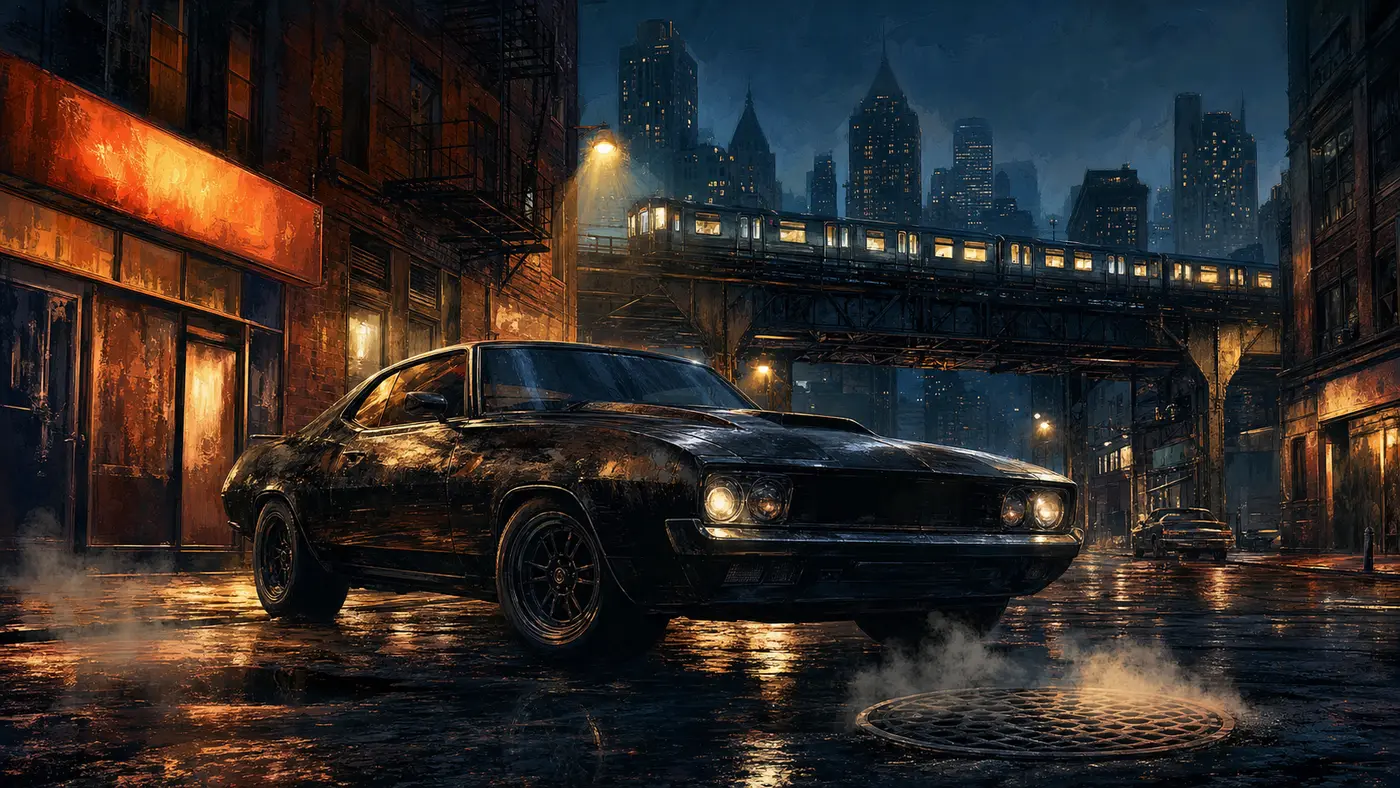
Rockstar ditched the stylized Liberty City of the 3D era for a near-documentary recreation of New York. The map breaks down into five zones that trace the real boroughs: Broker (Brooklyn), Dukes (Queens), Bohan (the Bronx), Algonquin (Manhattan), and the neighboring state of Alderney (New Jersey). Bridges, elevated trains, yellow cabs, steam rising from the manholes: the city breathes.
Crowd density, traffic, weather cycles, and the handling of light all marked a generational leap. It’s less a game map than an urban movie set, one where you can feel the openly acknowledged influence of 1970s New York cinema.
Niko Bellic and the end of the American dream
Where San Andreas and the 3D era leaned into parody and excess, GTA IV turns toward adult drama. Niko Bellic, a former Eastern European soldier haunted by the Balkan war, arrives at his cousin Roman’s place, lured by Roman’s lies about the high life in America. What he finds instead is squalor, debt, and the criminal underworld.
The script, written by Dan Houser and Rupert Humphries, runs on disillusionment. A few missions even force moral choices on you (spare or execute a target) with lasting consequences. That dark, almost melancholy tone broke with everything that came before and set up the narrative ambition that still runs through the franchise.
RAGE and Euphoria, the technical revolution
GTA IV is the first open world built on RAGE (Rockstar Advanced Game Engine), quietly introduced on Rockstar Games Presents Table Tennis back in 2006. But the real breakthrough is Euphoria, NaturalMotion’s behavioral simulation engine: instead of pre-recorded animations, characters react in real time to every impact, fall, or gunshot. A tumble down a staircase is never the same twice.
On top of that comes weighty driving, where every car carries its mass and slides on wet pavement, a system that divided players as much as it left its mark. This technical foundation didn’t stay isolated: it laid the groundwork for the entire modern Rockstar lineage.
| RAGE milestone | Year | Standout contribution |
|---|---|---|
| GTA IV | 2008 | First RAGE open world, Euphoria physics, weighty driving |
| Red Dead Redemption | 2010 | RAGE taken to the Wild West, an organic world |
| GTA V | 2013 | Three protagonists, dense Los Santos, the foundation of GTA Online |
| Red Dead Redemption 2 | 2018 | Peak simulation (wildlife, NPCs, systemic detail) |
| GTA VI | 2026 | The culmination of RAGE and Euphoria, a return to Vice City |
A critical and commercial tidal wave
At launch, GTA IV landed a 98 on Metacritic, which still ranks it among the highest-rated games of all time. The commercial success was just as brutal: $310 million taken in on day one, $500 million in a single week, making it at the time the fastest-selling entertainment product ever seen. The game would go on to top 25 million copies, setting the stage for the later explosion of GTA V and its record-breaking longevity.
The Lost and Damned and The Ballad of Gay Tony
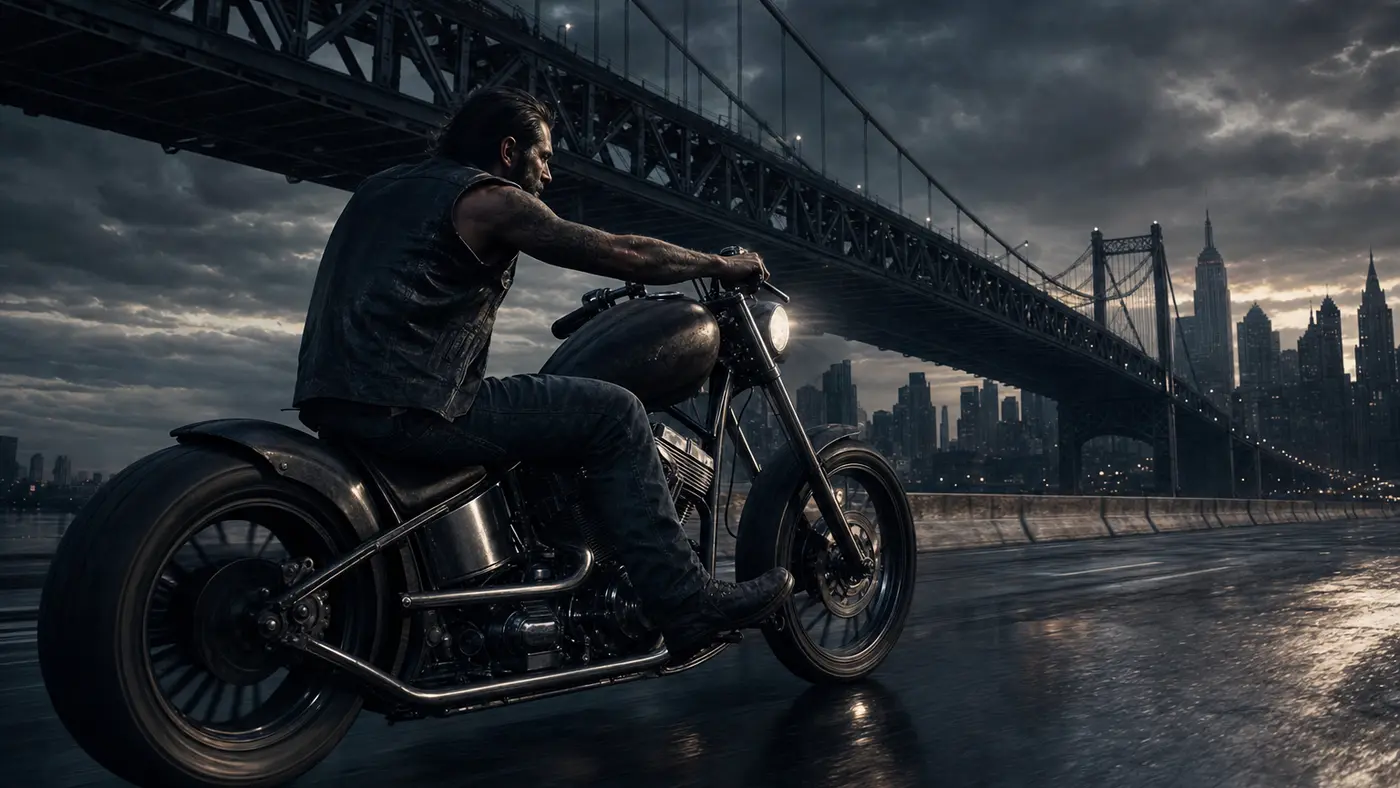
Rockstar extended Liberty City with two expansions set alongside Niko’s story. The Lost and Damned (February 17, 2009) follows Johnny Klebitz, vice president of the biker gang The Lost, in a grimy, brotherly register.
Why GTA IV deserves (finally) a remaster
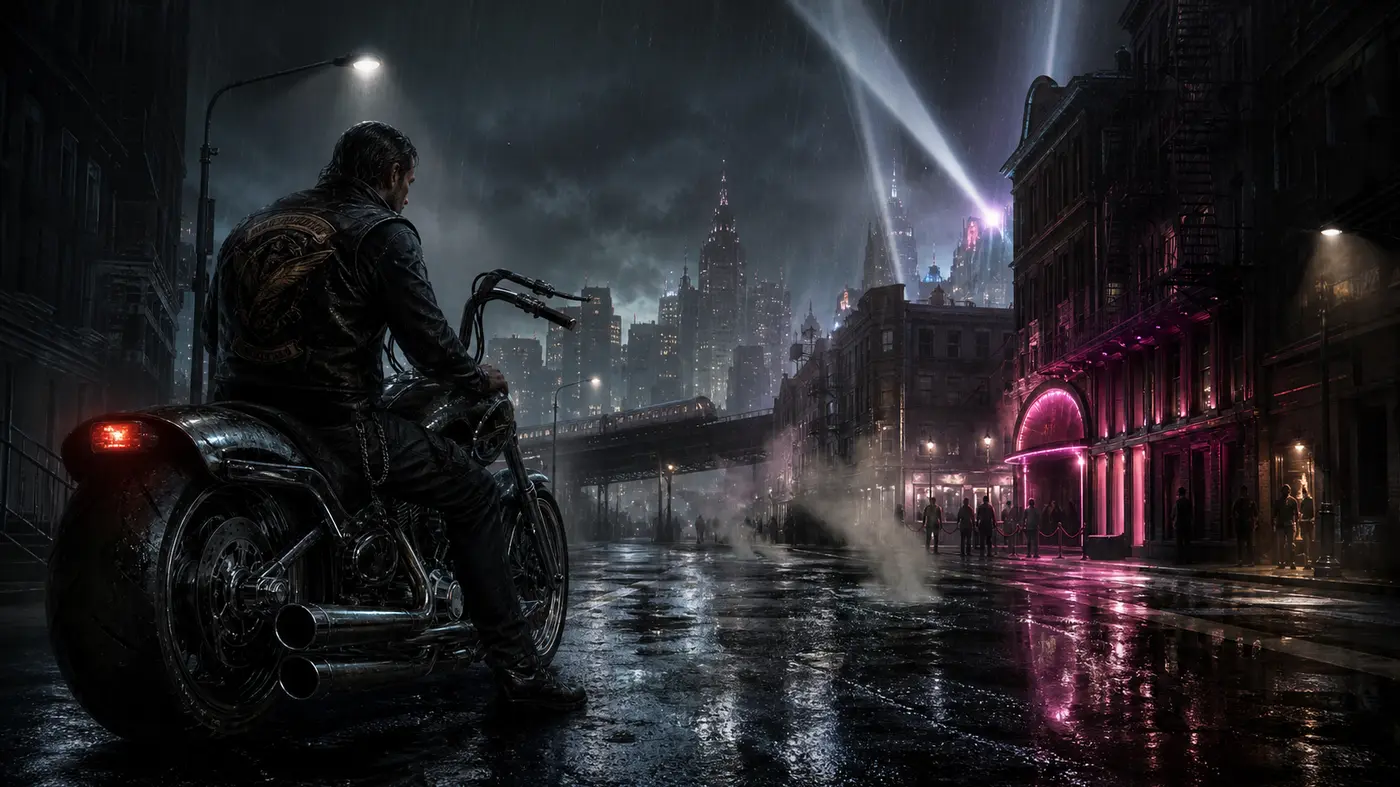
The paradox is cruel: this milestone stays trapped on last-gen hardware. The 2020 Complete Edition even impoverished the game, removing Games for Windows Live, the original multiplayer, and several tracks whose licenses had expired. With nothing official, it’s the community that keeps the city’s lights on, notably through an RTX Remix mod that overhauls lighting, shadows, and reflections.
The hope for a true remaster rests on one indirect signal: in its May 21, 2026 earnings call, Take-Two pointed to 29 titles through fiscal year 2029, including six unnamed remakes, remasters, or ports (Reported level). No title is confirmed, but plenty of fans point to GTA IV, the only major Rockstar game still stuck on dated hardware (Rumor level). To measure how far things have come since, there’s nothing like comparing GTA V and GTA VI, the direct heirs of the foundation laid in 2008. And to put it all in context, here are all the GTA games in order.
Comments
Be the first to react.