GTA ZONE

GTA 6 Graphics: 6 Feats of the RAGE Engine

By Alfred from GTA Zone · Published June 6, 2026 · 2 min read

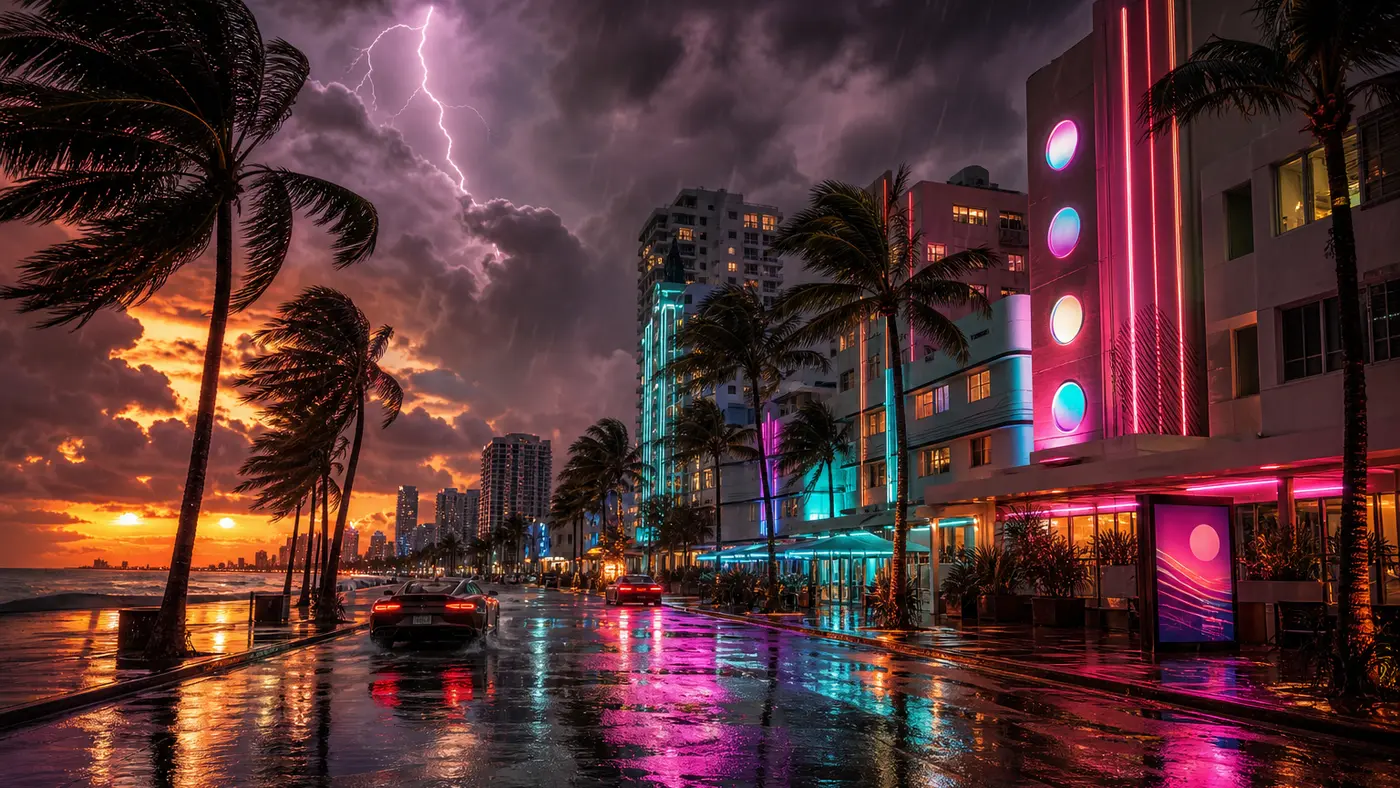
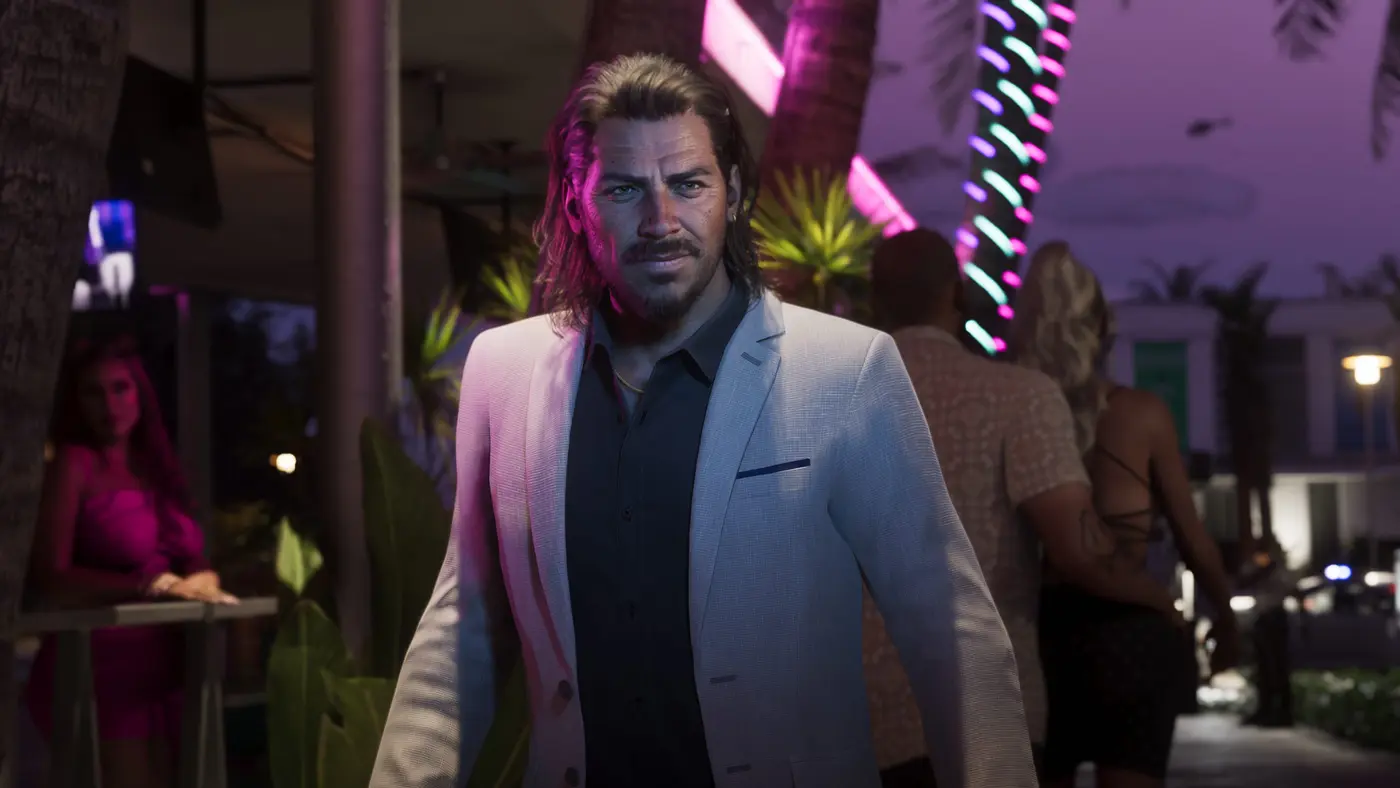
A Vice City street at night in GTA 6: a man in a light jacket walks down a sidewalk bathed in pink and turquoise neon, palm trees and passersby lit up by the glowing signs
Source: Rockstar Games

Grand Theft Auto VI isn’t playable yet, but its two trailers have already settled one question: technically, the game is playing in a different league. Fully ray-traced lighting, crowds that live their own lives, detail pushed down to the pores of the skin, all of it captured on a plain PS5. Here, point by point, is what Rockstar’s in-house engine really changes, and the price it pays to get there.

The most secretive engine in the industry

Rockstar has never published a technical breakdown of GTA 6, or even confirmed the version number of its engine. We do know, though, that it’s RAGE, the Rockstar Advanced Game Engine, the software backbone that has powered all of their major games since 2006, from GTA IV to Red Dead Redemption 2. That last one introduced physically based rendering (PBR), volumetric clouds and precomputed global illumination. GTA VI takes the next step by moving lighting to real-time ray tracing. The table below sums up what we can state, and with how much certainty.

Technical componentWhat GTA VI doesLevel
LightingReal-time ray-traced global illumination (RTGI), no more rasterized lightReported (Digital Foundry)
ReflectionsRay tracing on glass, windows and eyeglassesReported (Digital Foundry)
Resolution~1152p internal render reconstructed up to 4KReported (Digital Foundry)
Frame rate30 fps, 60 fps mode deemed unlikely at launchReported (Digital Foundry)
PlatformsPS5 and Xbox Series X|S only, SSD requiredConfirmed (Rockstar)
Demo sourceCaptured in-game on a base PS5Confirmed (Rockstar)

The best proof is still the trailer itself, which Rockstar presents as shot entirely in-game. Let’s (re)watch it with a technical eye below.

GTA VI's second trailer, captured in-game on PS5: all the lighting is computed with ray tracing. Source: Rockstar Games

What these graphics tell us about the final game

Taken together, these choices sketch out a coherent philosophy: Rockstar would rather have a dense world, lit in a physically believable way and bursting with life, even if it means capping the frame rate at 30 frames per second. It’s the same logic that already drives GTA 6’s gameplay mechanics, built for immersion rather than raw performance. For anyone who wants to judge for themselves, the best approach is still to pick apart, frame by frame, the hidden details in the second trailer, and to compare the spec sheets of the PS5 and Xbox Series versions. It remains to be seen whether all of this holds up once you’ve got a controller in hand, on November 19, 2026.
  1. 1

    The whole trailer runs in real time, on a base PS5

    This is the single most important point, and it's confirmed by Rockstar: the second trailer was "captured entirely in-game from a PlayStation 5, in equal parts gameplay and cutscenes." No pre-rendered movie footage, no PS5 Pro, no overpowered PC, just a standard living-room console that launched back in 2020. That distinction is huge, because it means this level of polish is the game's actual target, not a marketing showcase. Rockstar has a long track record of "in-engine" trailers that held up at launch, from GTA IV to Red Dead Redemption 2, which makes the promise believable.

  2. 2

    100% ray-traced lighting, with no "classic" light sources

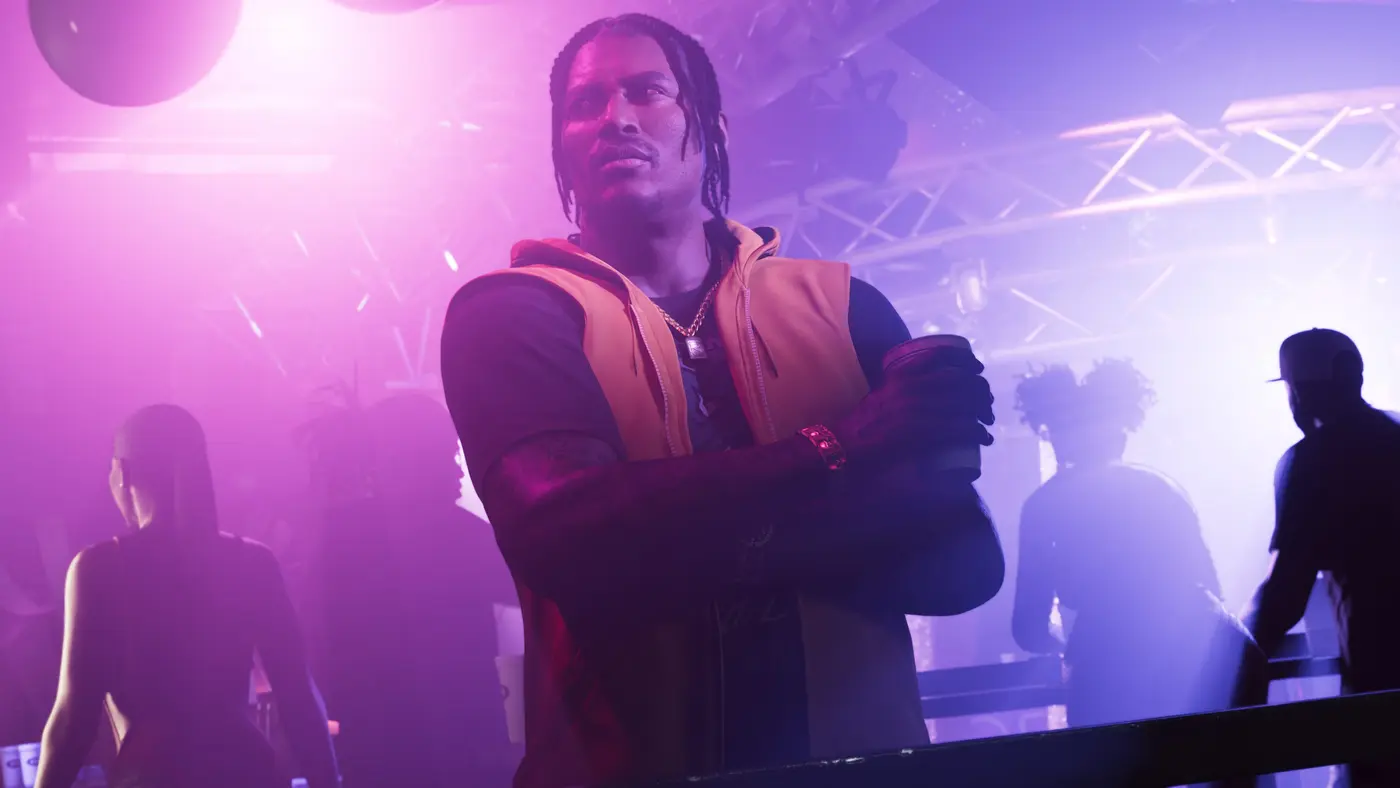
    A GTA 6 character seen head-on in a nightclub bathed in pink and purple neon, a halo of volumetric light and backlit dancers in the background

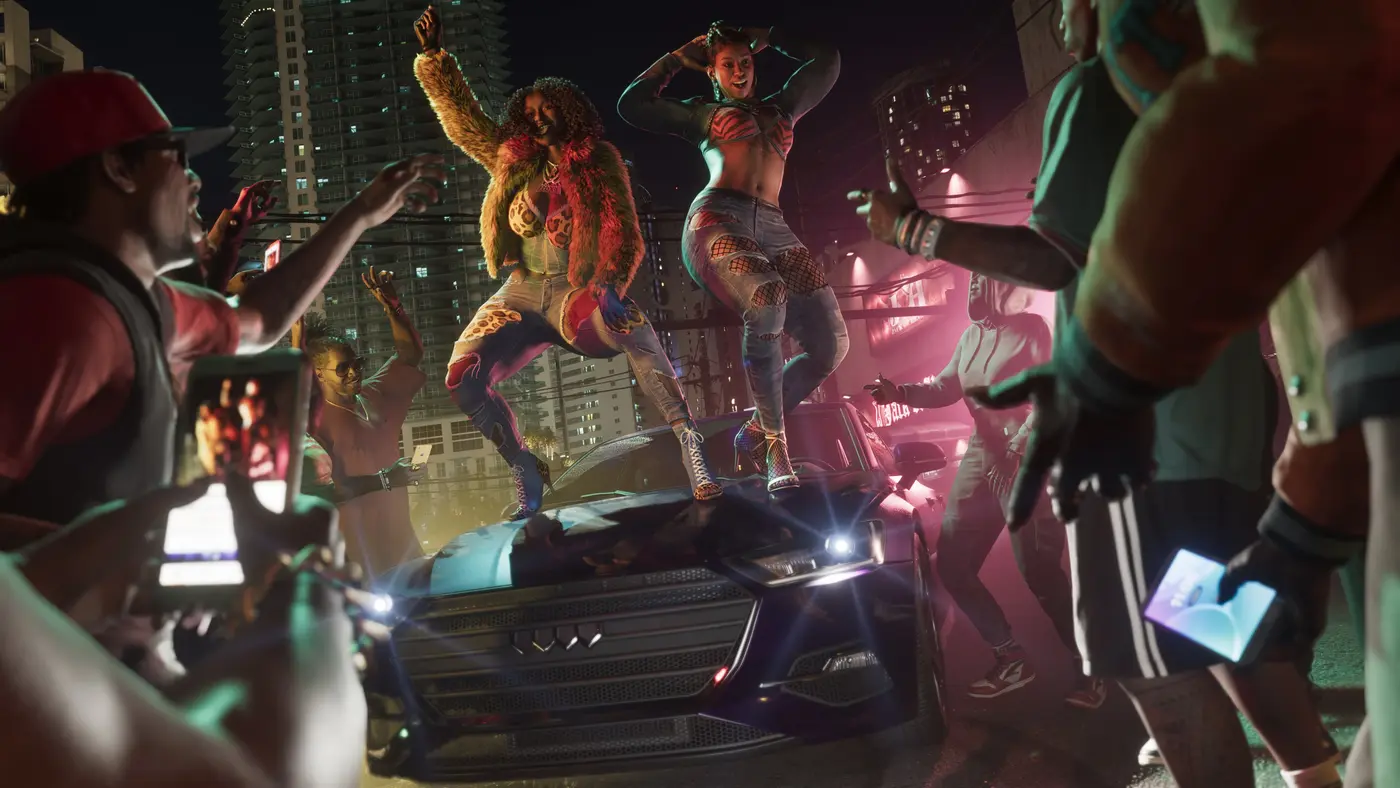
    Based on the technical breakdown by Digital Foundry, GTA 6 drops traditional rasterized lighting in favor of fully ray-traced global illumination (RTGI): there are no more hand-"painted" light sources. In practice, that's what makes Vice City's neon spill realistically across wet asphalt, over skin and through the haze of the clubs. Digital Foundry also points to ray-traced reflections on transparent surfaces, glass, car windows and eyeglass lenses, one of the toughest challenges in real-time rendering. Red Dead Redemption 2 still relied on precomputed global illumination; here, the math happens live.

  3. 3

    Crowds that truly come alive, driven by Euphoria

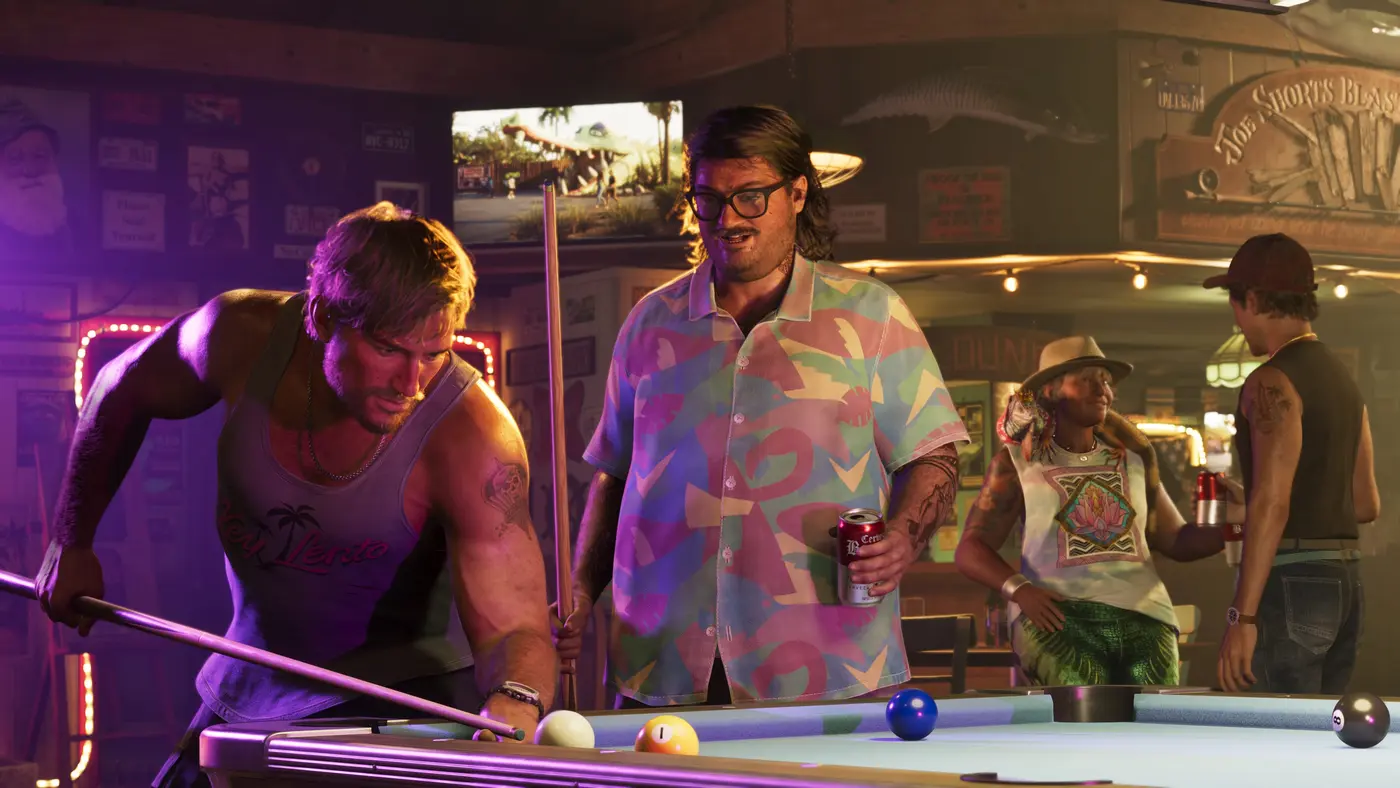
    Inside a Vice City bar in GTA 6: two men at a pool table, one leaning in to take a shot in a tank top, the other in a pastel shirt with a can in hand, glowing signs and other patrons in the background

    In Trailer 2's beach and street scenes, the passersby are no longer just set dressing. You can spot an NPC tossing a drink that another one catches, people filming themselves on their phones, a spray tan that leaves skin glistening right where it was applied. That behavioral autonomy is the legacy of Euphoria, NaturalMotion's procedural simulation engine that has been part of RAGE since GTA IV back in 2008, computing how bodies react in real time instead of replaying canned animations. The jump in density over GTA V is obvious: the street goes from a parade of extras to an ecosystem of small, semi-autonomous agents.

  4. 4

    Detail pushed all the way down to skin pores

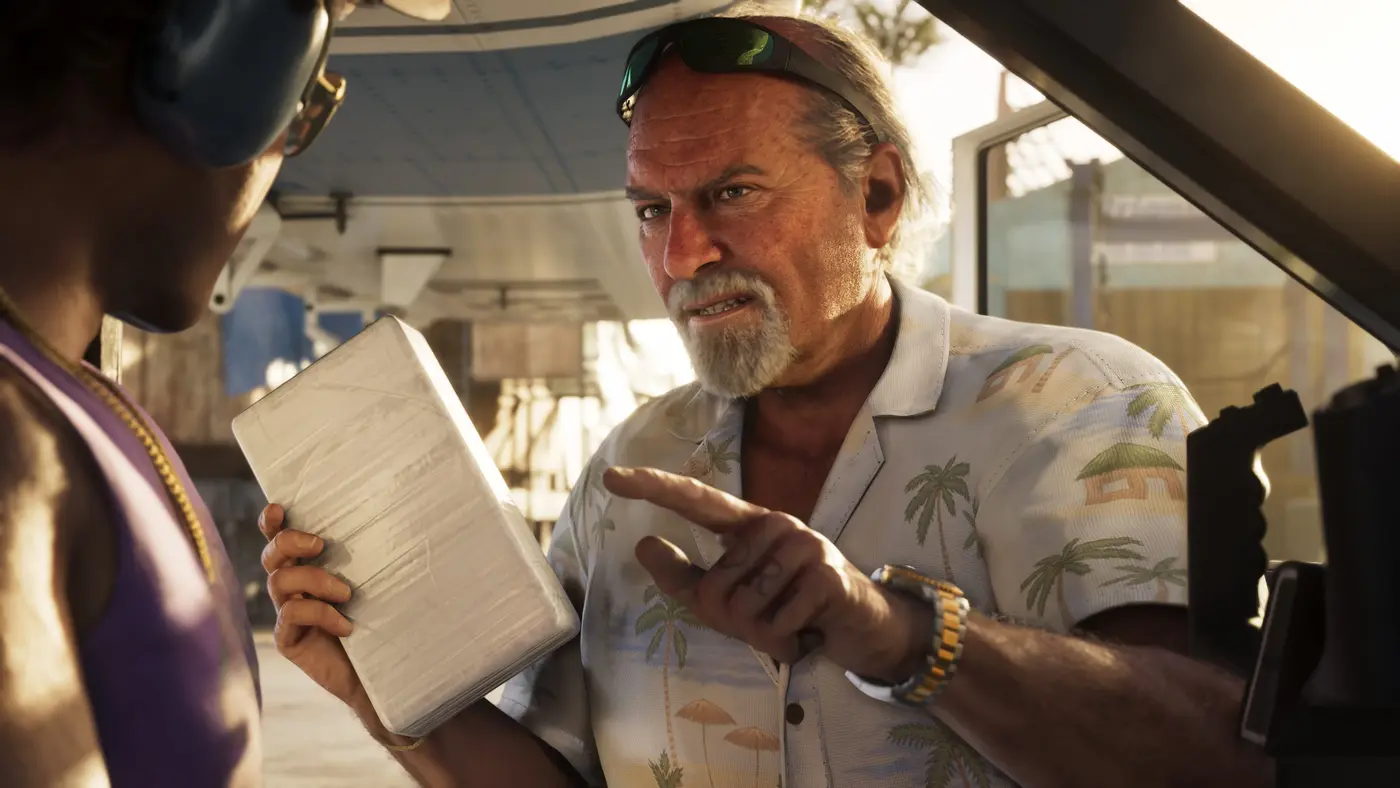
    A close-up in golden late-day light in GTA 6: an older man with a weathered face, sunglasses pushed up on his forehead, a palm-print shirt and a gold watch, talking to another character

    On ordinary passersby, players have spotted unique scars, moles and tattoos, sweat on the skin, footprints forming in the sand as the ground deforms underfoot. On the rendering side, Digital Foundry describes hair modeled strand by strand (a very expensive feature), clothing simulated independently of the body, and PBR materials, refined along the same path laid down by Red Dead Redemption 2. It's this level of micro-detail, multiplied across an entire crowd, that sets GTA 6 apart from nearly every open world out there today.

  5. 5

    A seamless world, reserved for the new generation

    GTA 6 is launching only on PS5 and Xbox Series X|S, never on PS4 or Xbox One. That's not a commercial whim: streaming a map this large and this dense nonstop, without a single loading screen, demands an NVMe SSD that 2013 consoles simply don't have. The RAGE engine loads and unloads the world on the fly as you drive; a mechanical hard drive can't keep up with the throughput. It's also why Leonida can aim for the title of the biggest map Rockstar has ever built without sacrificing detail. The downside: owners of older consoles are left out in the cold.

  6. 6

    The price of all this: a locked 30 frames per second

    The price for that riot of effects is smoothness. Digital Foundry considers a 60 fps mode unlikely at launch: the game is reportedly targeting a locked 30 fps, with a fairly modest internal resolution (around 1152p) reconstructed up to 4K via FSR-style upscaling. Ray-traced global illumination is simply too expensive to double the frame rate without wrecking both the resolution and the visual identity. It's a deliberate choice to put image quality ahead of speed, and it's also why the PC version of GTA 6, expected later on, is so eagerly awaited by the high-performance crowd.

FAQ

What are GTA 6's graphics like?

GTA 6 leans on fully ray-traced lighting (RTGI), ray-traced reflections on glass, dense and autonomous crowds, hair modeled strand by strand, and character detail pushed all the way down to scars and sweat. According to Digital Foundry's analysis, the game is targeting 30 frames per second with an internal resolution reconstructed up to 4K. Above all, Rockstar has confirmed its trailers were captured in-game on a standard PS5.

What graphics engine does GTA 6 use?

Rockstar's in-house engine, RAGE (Rockstar Advanced Game Engine), used in all of their major games since 2006 and GTA IV. It integrates Euphoria, NaturalMotion's procedural simulation technology that animates bodies in real time. Rockstar never shares the internal details of its engine, not even its version number.

Will GTA 6 run at 60 fps?

Probably not on console at launch. Digital Foundry's analysis figures a 60 fps mode is unlikely: ray-traced lighting is too demanding to double the frame rate without sacrificing resolution. The game is reportedly aiming for a locked 30 fps on PS5 and Xbox Series. A performance mode or the PC version could change the picture later on.

Why isn't GTA 6 coming to PS4 and Xbox One?

Because the game requires an NVMe SSD to stream its massive world nonstop, along with a CPU and GPU far more powerful than what the 2013 consoles offer. The PS4 and Xbox One rely on mechanical hard drives that can't keep up with the necessary throughput. GTA VI is therefore limited to the PS5 and Xbox Series X|S.

Sources

Related

Comments

    Leave a comment

    Comments are posted right away, then moderated. Keep it civil.

    ← All GTA Zone articles