
Rockstar · Analysis
Sleeping Dogs: The Forgotten GTA-Like of Hong Kong
Sleeping Dogs (2012), the forgotten Hong Kong GTA-like: an undercover cop in the triads, kung-fu combat, a shuttered studio, and a Simu Liu movie.
Contents
- From True Crime to Sleeping Dogs: a game brought back from the dead
- Wei Shen, the undercover cop GTA never dared to make
- Kung fu over the gun
- Hong Kong, a setting Rockstar has never visited
- A critical darling, then let down by the numbers
- No sequel, no studio: the Sleeping Dogs curse
- What Sleeping Dogs tells us about the genre
- FAQ
Everyone’s waiting on the next great criminal open world. Yet one of the best is already fourteen years old, and almost nobody talks about it. Sleeping Dogs, released in 2012, pulled off what few GTA-likes ever have: standing on its own, with a setting, a hero, and a combat system Rockstar never even attempted. Then it fell off the radar. Here’s why this cult classic deserves far better than to be forgotten.
From True Crime to Sleeping Dogs: a game brought back from the dead
The story of Sleeping Dogs begins with a wreck. The game was originally called True Crime: Hong Kong, the third entry in an Activision series. But in 2011, after delays and a ballooning budget, Activision flat-out canceled the project. United Front Games, the Vancouver-based studio, was left with a nearly finished game and no one to publish it.
It was Square Enix that fished it out a few months later, buying the publishing rights. Without the True Crime brand in hand, the publisher renamed the game Sleeping Dogs. The title finally launched on August 14, 2012 on PlayStation 3, Xbox 360, and PC. That painful birth partly explains its fate: an ambitious game, but one whose commercial run was always shaky.
Wei Shen, the undercover cop GTA never dared to make
In GTA, you play criminals. In Sleeping Dogs, you play a cop, and that’s the whole point. Wei Shen is a Chinese-American police officer sent undercover into the Sun On Yee, the biggest triad in Hong Kong. His mission: earn the gangs’ trust so he can bring them down from the inside. The trouble is, the deeper he goes, the more the line between cop and crook blurs.
This narrative device, the double agent eaten alive by his own cover, owes everything to Hong Kong cinema, from Infernal Affairs to John Woo’s crime thrillers. Where Rockstar’s heroes own their outlaw lives, Wei Shen is torn apart morally at every turn. It’s a tone the GTA series, more focused on satirizing America, has never really explored.
Kung fu over the gun
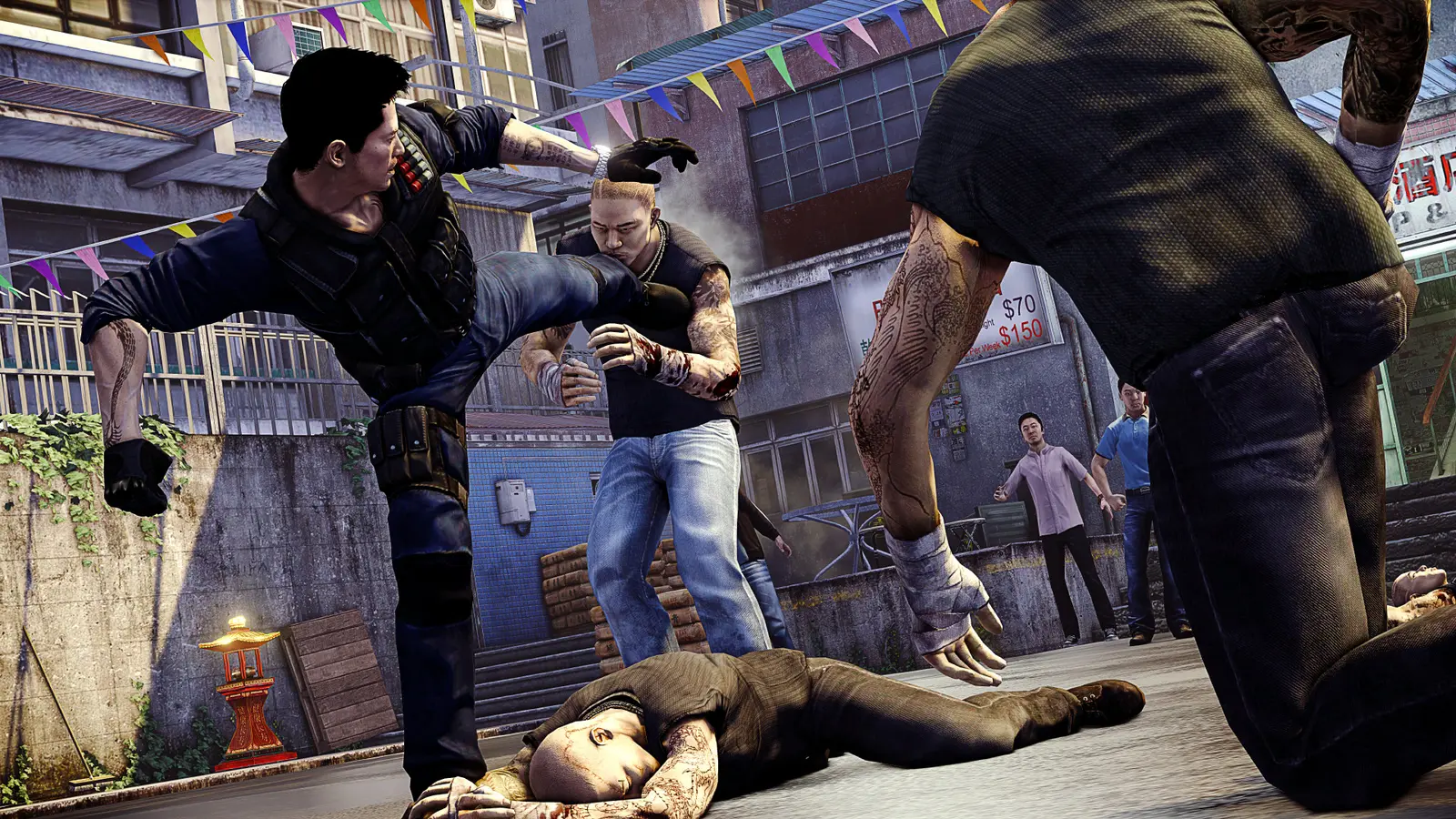
This is the game’s true signature. Where GTA settles most fights with a pistol, Sleeping Dogs puts hand-to-hand combat at the heart of its gameplay. Wei Shen is a martial artist: he chains strikes, well-timed counters, arm locks, and throws. The system rewards reading your opponent over mashing buttons.
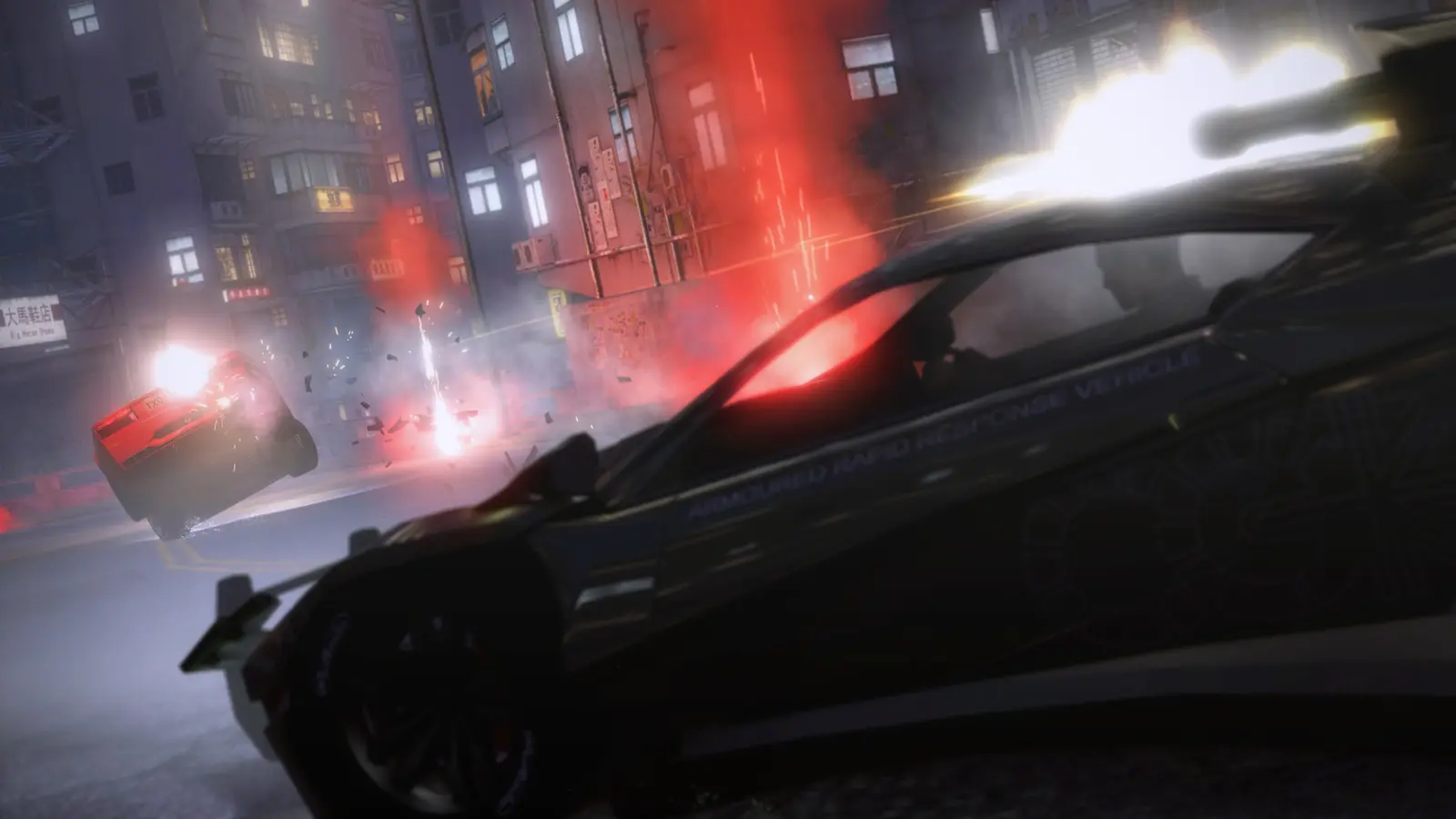
The game becomes downright gleeful thanks to its environmental takedowns. Phone booths, fans, ice bins, dumpsters: the environment is packed with interaction points that trigger spectacular kills, lifted straight from Hong Kong action cinema. Gunfights exist, and so do the car chases and an action hijack system that lets you leap from one vehicle to another mid-pursuit, but it’s the melee that sticks with you.
Hong Kong, a setting Rockstar has never visited
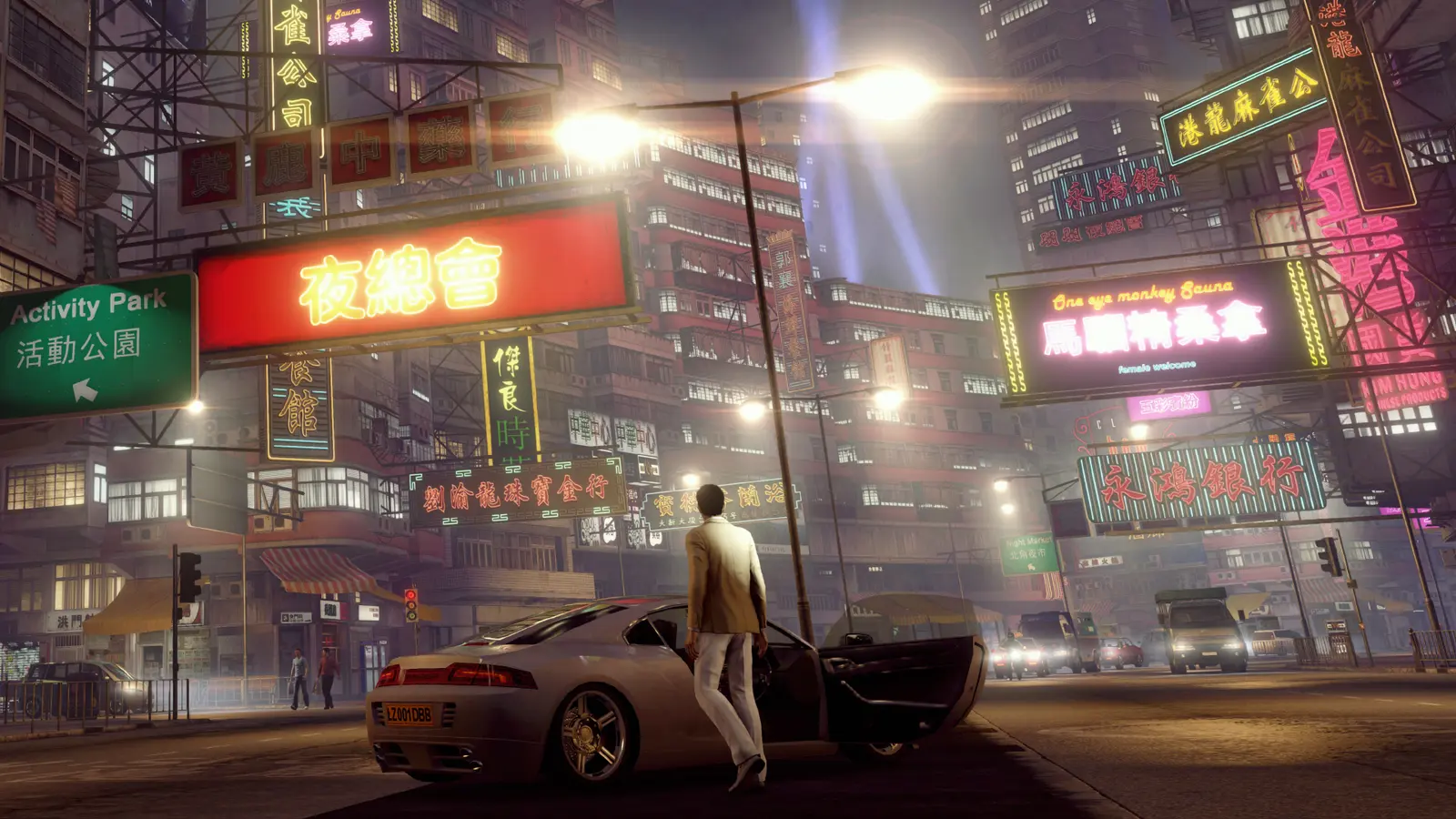
Sleeping Dogs’ greatest achievement is its playground. The game’s Hong Kong isn’t the real city but a believable, living recreation: night markets, temples, docks, business districts, cramped apartments, and skyscrapers. The vertical density, the cascading lit-up signs, and the left-hand traffic give it a visual identity you recognize instantly, a world away from the GTA saga’s American cities.
That local color is everywhere: you eat at street stalls to heal, sing karaoke, chase dates, bet on cockfights, and collect jade statues to unlock combat techniques. All of it roots the game in its culture. The official trailer below captures this tense urban-crime mood well.
To place Sleeping Dogs among the other contenders for the throne, our roundup of the best games like GTA files it among the genre’s hidden gems, alongside Watch Dogs, Ubisoft’s GTA killer and Cyberpunk 2077.
A critical darling, then let down by the numbers
At launch, Sleeping Dogs was met with a very warm critical reception. The press praised its combat, its atmosphere, its voice acting, and its portrayal of Hong Kong, with averages around 80 out of 100. The 2014 Definitive Edition kept that reputation, holding a 77 out of 100 on aggregator OpenCritic. In short, on paper, a clear critical success.
Commercially, it’s another story. The game sold around 1.75 million copies in seven months, a respectable figure, but one Square Enix deemed insufficient. The publisher actually cited slower-than-expected sales of Sleeping Dogs, among other titles, as one of the causes of a roughly $70 million loss over a half-year. The game would eventually turn a profit over time, but the label of commercial disappointment stuck to it.
The table below sums up the game’s key stats.
| Sleeping Dogs at a glance | Detail |
|---|---|
| Original release | August 14, 2012 (PS3, Xbox 360, PC) |
| Developer | United Front Games (Vancouver) |
| Publisher | Square Enix |
| Origin | True Crime: Hong Kong, canceled by Activision in 2011 |
| Hero | Wei Shen, an undercover cop in the Sun On Yee triad |
| Re-release | Definitive Edition, October 8, 2014 (PS4, Xbox One, PC) |
| Critic score | Around 80, 77 out of 100 for the Definitive Edition (OpenCritic) |
| Sequel | None: spin-off Triad Wars canceled in late 2015, studio closed in 2016 |
No sequel, no studio: the Sleeping Dogs curse
A cult game, critics won over, and yet nothing after it. United Front Games first took a gamble: Triad Wars, a free-to-play multiplayer spin-off set in the same universe. The project didn’t land: its development was halted in late 2015 and its servers shut down in early 2016. That same year, the Vancouver studio closed its doors for good. A more traditional sequel, floated at one point, would never see the light of day.
Since then, the rights have been lying dormant at Square Enix, hence the double meaning of the title (let sleeping dogs lie). The only glimmer of hope comes from the movies: after several false starts, a live-action film is finally moving forward, now fronted by Simu Liu (Marvel’s Shang-Chi) as Wei Shen, with action director Timo Tjahjanto at the helm. Enough, maybe, to bring the franchise back into the spotlight.
What Sleeping Dogs tells us about the genre
Sleeping Dogs will stand as proof that a GTA-like could find its own voice without copying Rockstar. The table below sums up what sets it apart from the saga that defined the genre.
| Head to head | Sleeping Dogs | Grand Theft Auto |
|---|---|---|
| Setting | Hong Kong, dense and vertical | American cities (Liberty City, Los Santos, Vice City) |
| Hero | Wei Shen, an undercover cop | Unapologetic criminals (Niko, CJ, Michael, Trevor) |
| Combat | Martial-arts melee, counters, takedowns | Mostly firearms |
| Tone | Hong Kong undercover crime drama | Satire of America |
| Legacy | Studio closed, no sequel | A franchise worth over eight billion dollars |
This urban-crime DNA runs through other under-the-radar classics, like The Warriors and Rockstar’s non-GTA games, which we’ve gathered in our rundown of the best Rockstar games outside of GTA. Still, the genre is waiting on its next peak, and it has a name: Rockstar’s return to Vice City with Grand Theft Auto VI, whose every step we track in our update on the GTA 6 release date. In the meantime, if you spot the Sleeping Dogs Definitive Edition going cheap, grab it: it’s one of the best-kept secrets in the criminal open-world genre.
FAQ
What is Sleeping Dogs?
Sleeping Dogs is an open-world action game released in August 2012 on PlayStation 3, Xbox 360, and PC, developed by Canadian studio United Front Games and published by Square Enix. You play as Wei Shen, a Chinese-American cop who goes undercover inside the Sun On Yee triad, in a Hong Kong recreated with its night markets, neon-lit alleys, and car chases. The game blends investigation, driving, gunfights, and above all a deeply polished hand-to-hand combat system.
Is Sleeping Dogs a game like GTA?
Yes, it's openly a GTA-like: open world, criminal missions, free-roam driving, and side activities. But it stands apart on two major points. First the setting, Hong Kong, which Rockstar has never explored. Second the gameplay: where GTA leans on firearms, Sleeping Dogs puts martial-arts brawling front and center, with spectacular fights lifted straight from Asian action cinema. You also play an undercover cop, not a full-blown criminal.
Can you still play Sleeping Dogs in 2026?
Yes. The best way to play is still Sleeping Dogs: Definitive Edition, released on October 8, 2014 on PlayStation 4, Xbox One, and PC. It bundles the base game with all of its add-ons and reworked visuals. You'll regularly find it cheap on digital storefronts. The original 2012 version is still playable on PC and on backward-compatible consoles.
Will there be a Sleeping Dogs 2?
No, no sequel is planned. A multiplayer spin-off, Triad Wars, was developed and then canceled in late 2015, with its servers shutting down in early 2016, and studio United Front Games closed its doors that same year. The rights still belong to Square Enix. The only thing on the horizon is a live-action movie, long in development, now fronted by actor Simu Liu in the role of Wei Shen.
A classic worth revisiting while we wait for the next big thing. Alfred, GTA Zone.
Sources
- Reported Wikipedia: Sleeping Dogs (video game). Originally True Crime: Hong Kong, canceled by Activision in 2011, rights taken over by Square Enix, released August 14, 2012 on PS3, Xbox 360, and PC. Wei Shen, an undercover cop in the Sun On Yee triad, hand-to-hand combat, Definitive Edition in October 2014, around 1.75 million copies in seven months, classified as a GTA clone
- Confirmed Steam (Square Enix): official page for Sleeping Dogs: Definitive Edition, developed by United Front Games, published by Square Enix, released October 8, 2014 (source of the gameplay screenshots)
- Reported Game Developer: slower-than-expected sales of Sleeping Dogs, among others, contributed to a roughly $70 million loss for Square Enix over the half-year
- Reported Game Developer: United Front Games, the studio behind Sleeping Dogs, closed its doors in 2016
- Reported OpenCritic: Sleeping Dogs: Definitive Edition holds a critic average of 77 out of 100
- Reported GamesRadar: the Sleeping Dogs movie adaptation moves forward, with Simu Liu as Wei Shen and director Timo Tjahjanto
- Reported Forbes (Paul Tassi): the Simu Liu-led Sleeping Dogs movie lands its director, announced December 28, 2025
About the author
Alfred from GTA Zone
Alfred is the byline of GTA Zone, written and checked by the newsroom. Every fact is sourced and labeled Confirmed, Reported or Rumor, and every page is updated when the story moves.
Comments
Be the first to react.