In March 2009, Rockstar released the best GTA of the year on the least likely console imaginable: the Nintendo DS. Grand Theft Auto: Chinatown Wars posts the highest Metacritic score ever recorded on the system, a drug economy ahead of its time, and a comic-book art style. And yet almost nobody bought it. Here’s a look back at the most underrated GTA in the series.
A top-down GTA, drawn like a comic book
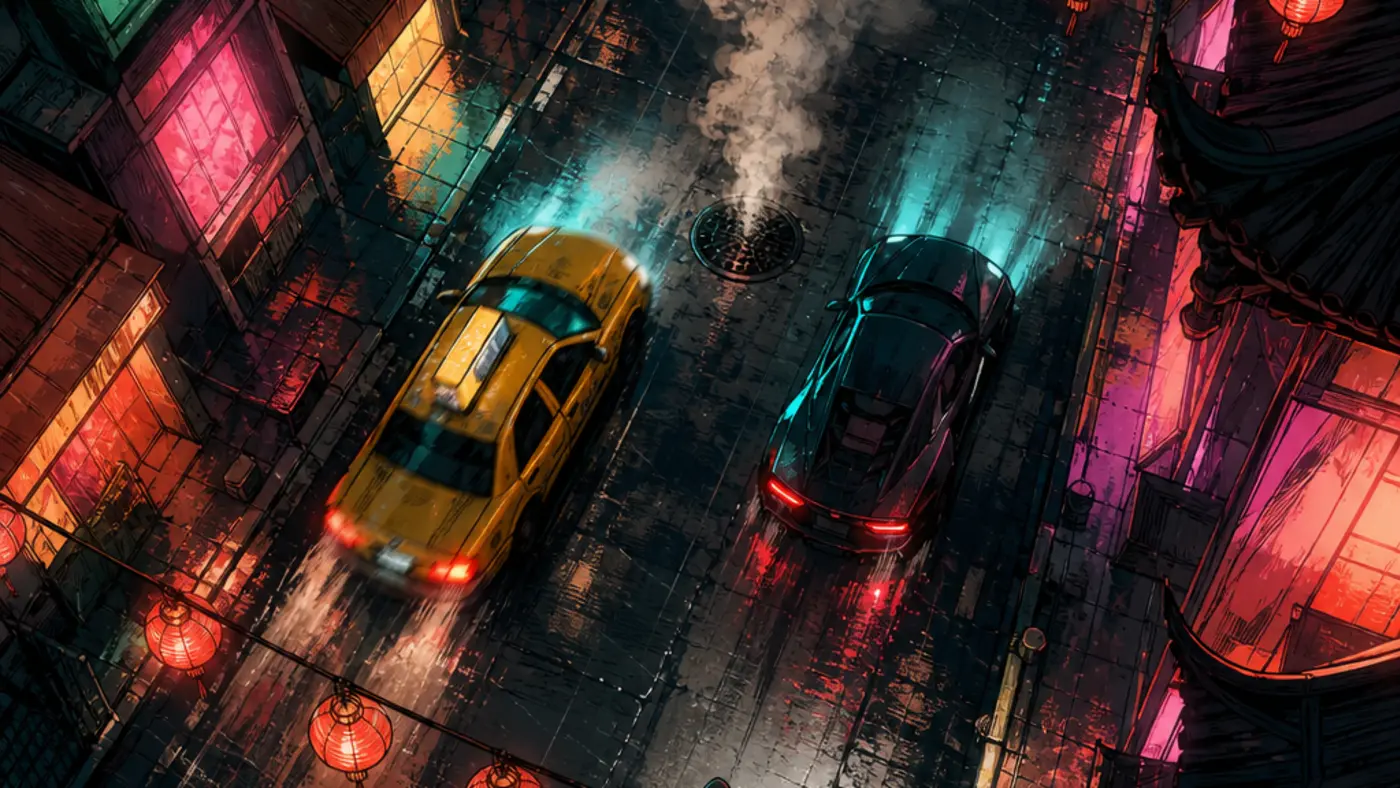
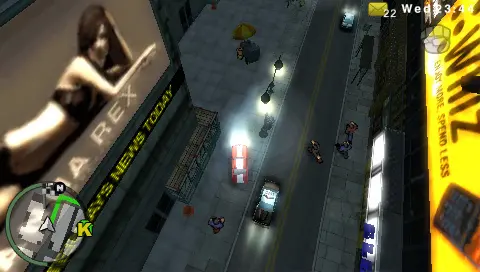
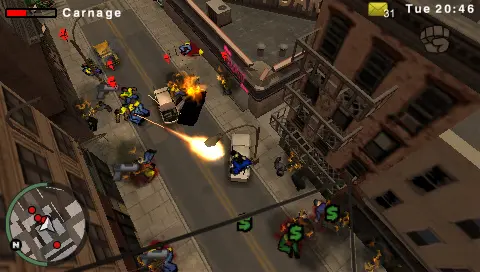
On paper, Chinatown Wars looks like a return to its roots. After the move to 3D and the third-person camera of GTA III, Rockstar Leeds and Rockstar North went back to the top-down view of the earliest 2D GTA games. Except the camera isn’t fixed: it fully rotates and tilts toward the ground, hovering over a three-dimensional world.
The real stroke of genius is visual. The game drops the era’s budding photorealism for cel-shading, polygons with thick black outlines that give it the look of a comic book, a first for the series. That art direction wasn’t just aesthetic: it made it possible to run an entire 3D city on a tiny Nintendo DS cartridge, with more than 900,000 lines of hand-optimized code.
Huang Lee, the Yu Jian sword, and the Triads
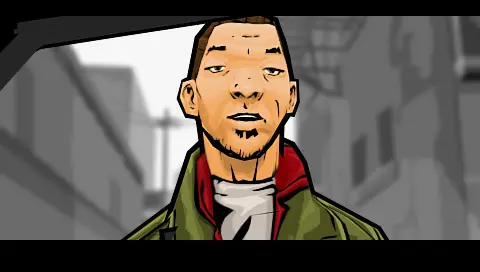
The story, meanwhile, is pure Rockstar. You play as Huang Lee, the spoiled son of a murdered Triad boss, arriving in Liberty City to deliver the Yu Jian to his uncle Kenny, a family sword won in a card game. No sooner has he arrived than Huang is ambushed, robbed of the sword, and left for dead. The rest of the game is a deep dive into the Triads’ war of succession, set against a backdrop of crooked cops, the Italian mob, and one betrayal after another.
The setting is no accident: it’s the Liberty City of GTA IV, released a year earlier, reused from a top-down perspective. Chinatown Wars is firmly rooted in the saga’s HD universe, with its neighborhoods, parody storefronts, and biting humor, but with a tone and a hero all its own.
The drug dealing, the real revolution
The mechanic everyone remembers is the drug trade. Chinatown Wars grafts a genuine little market simulation onto classic GTA. Six substances move through Liberty City, each with its own price range and clientele. The idea is simple: buy where it’s cheap, sell where demand spikes, all while watching a market that fluctuates constantly and police raids that are always a possibility.
| Drug | Price range | Trafficking profile |
|---|---|---|
| Weed | Lowest | High volume, low margin |
| Downers | Low | Easy to move |
| Acid (LSD) | Medium | Good risk/reward balance |
| Ecstasy | Medium | Variable demand |
| Coke (Cocaine) | High | Big margins, big risks |
| Heroin | Highest | The jackpot, heavily policed |
Tips arrive by email when a price jumps, you stash your stock, and you either cash in or get fleeced. That economic loop, addictive and clever, left a mark long before making money in GTA Online became a national pastime.
The DS stylus as a weapon
Chinatown Wars doesn’t just bring GTA to a handheld: it actually uses the console. The touchscreen and stylus become full-fledged gameplay tools. To steal a car, you hotwire it by connecting the right wires with the stylus. To make a Molotov cocktail, you fill the bottle, push in the wick, and light it. You assemble a scoped rifle piece by piece, scratch off lottery tickets, disable an alarm, and flick a grenade with a swipe. The microphone even lets you whistle for a taxi.
These touches made Chinatown Wars as much a technical showcase as a game: proof that a GTA could exist somewhere other than a home console without compromising itself.
Praised by critics, snubbed at retail
The critical verdict was unanimous. With a score of 93 out of 100 on Metacritic, Chinatown Wars became the highest-rated Nintendo DS game in history, a record certified by Guinness World Records. The press praised its depth, the boldness of the drug dealing, and how skillfully it was adapted to a handheld.
Except the scores never turned into sales. The problem was structural: Rockstar had released a Mature-rated game, for adults only, on a console whose audience was overwhelmingly young and family-oriented. The players likely to buy a GTA weren’t the ones who owned a DS. The result was a launch well below analyst expectations, to the point that the gaming press openly wrote about retail success eluding the game. The port to PSP a few months later, then to iOS and Android, never turned things around.
Where to (re)play Chinatown Wars, and its legacy
Good news: the game hasn’t disappeared. After the DS, it lived several lives, and the mobile versions remain the easiest to run today.
| Platform | Release | Good to know |
|---|---|---|
| Nintendo DS | March 2009 | The original version, built for the stylus |
| PlayStation Portable | October 2009 | No touchscreen, reworked controls |
| iOS | 2010 | Pulled from the App Store in late 2013, then restored |
| Android | 2014 | The most accessible port in 2026 |
Beyond its status as a forgotten gem, Chinatown Wars left a mark. It proves that the series’ early top-down view could coexist with Rockstar’s modern ambition, and its drug economy inspired mechanics you still run into in the studio’s games. To put it all in context, here’s every GTA in order and the story of Rockstar’s early days.
One thing is clear: Chinatown Wars is the last brand-new GTA released on a Nintendo console, and the last one built for a handheld. The remastered The Trilogy Definitive Edition did come to Switch in 2021, but those were older entries, not a new game. Since then, the series has gone all-in on the big screen. The next entry, Grand Theft Auto VI, arrives on PS5 and Xbox Series on November 19, 2026, with no Nintendo Switch 2 version planned. That makes the DS’s little masterpiece all the more precious: a reminder of a time when Rockstar dared to slip an entire GTA into your pocket.

Comments
Be the first to react.