

Rockstar promises the most alive world ever built, and the internet took that to mean ‘memory’ NPCs powered by a revolutionary AI. The catch: the studio has confirmed nothing of the sort for Grand Theft Auto VI. Here’s what’s actually been shown, what a real Rockstar patent says, and why Red Dead Redemption 2 is still the only credible benchmark.
What Rockstar has actually shown of GTA 6’s world
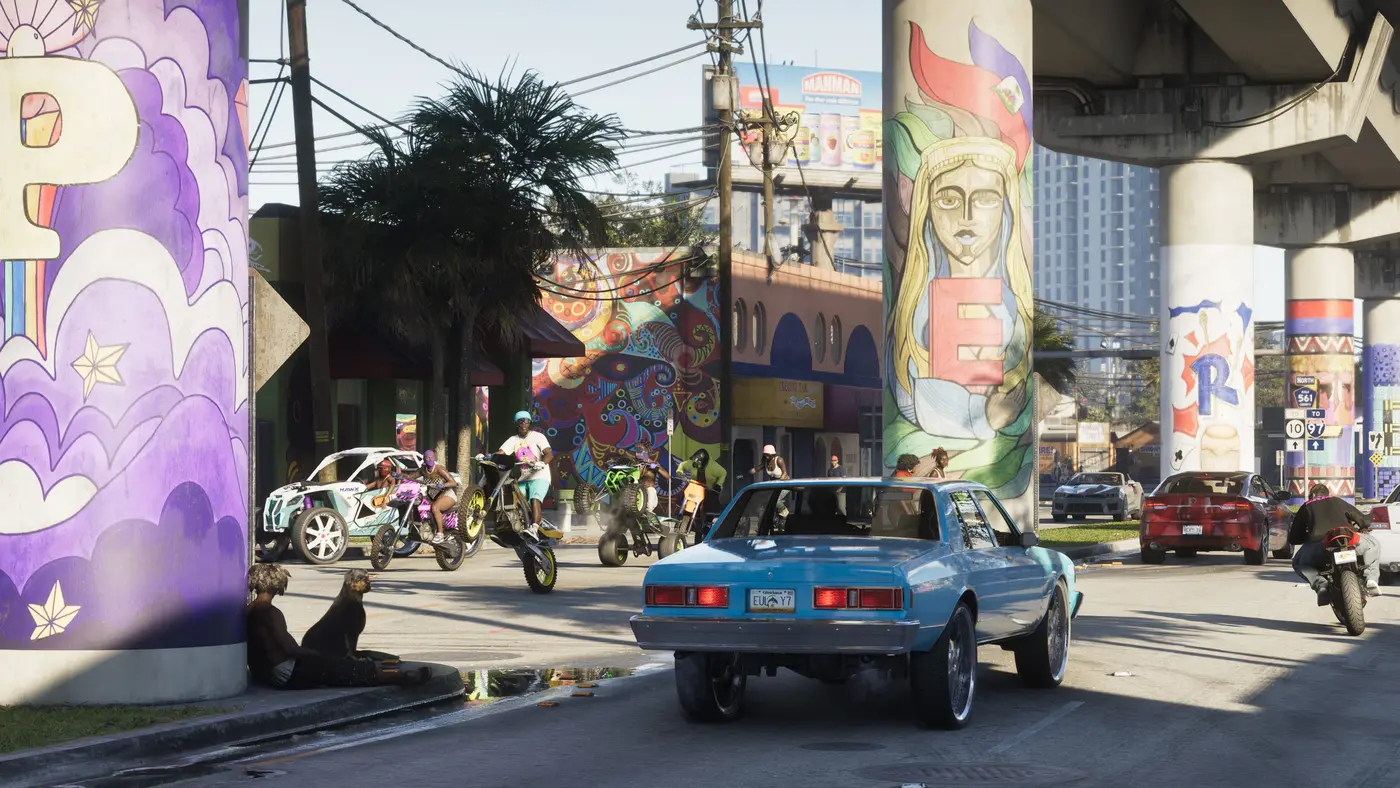
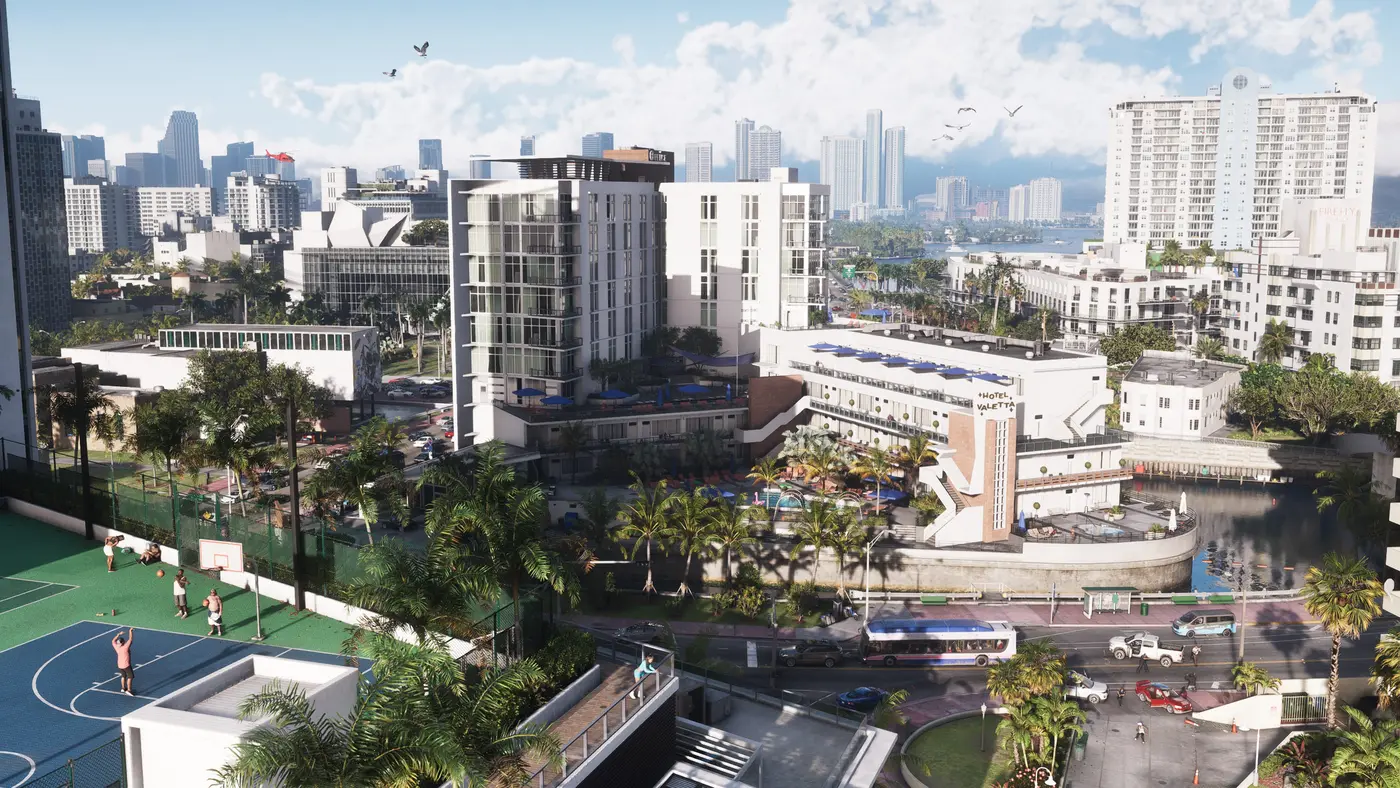
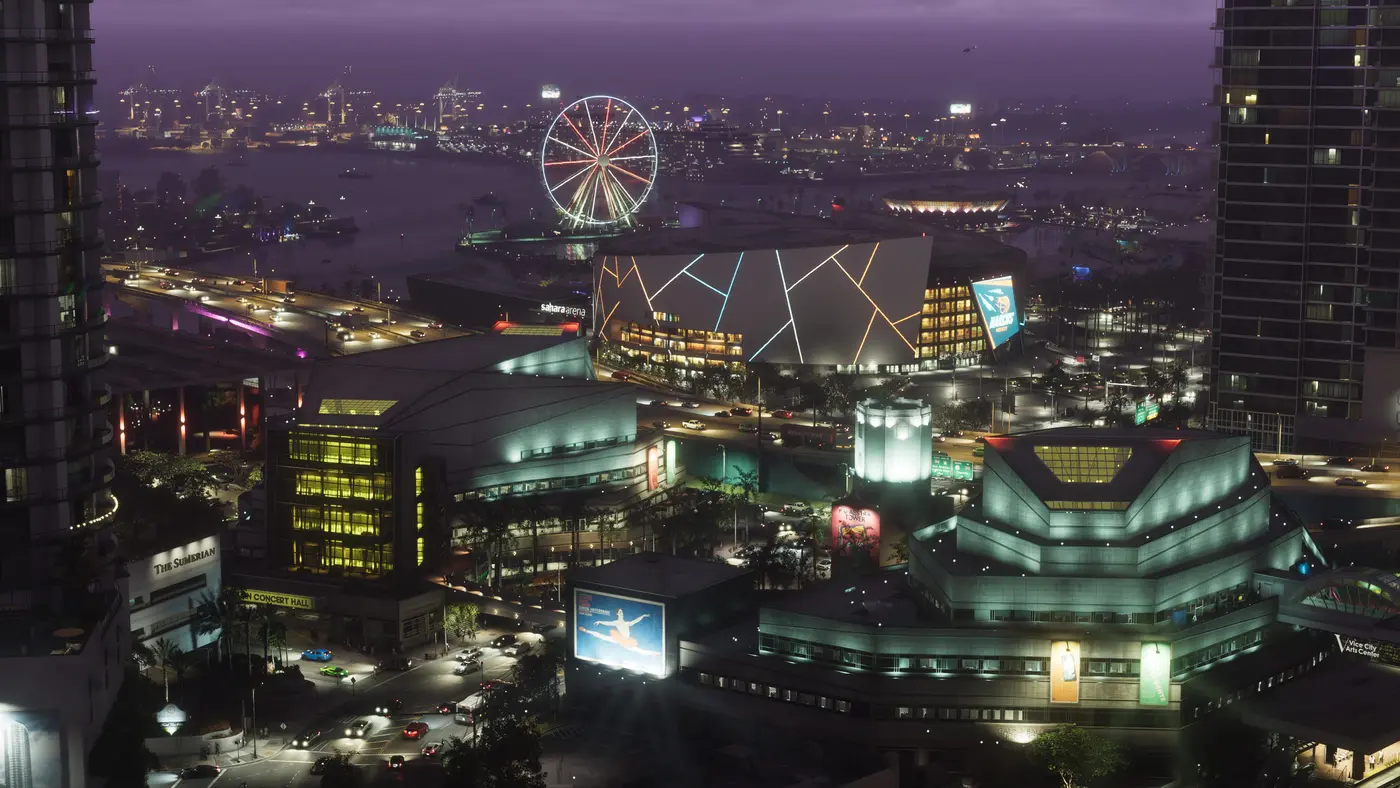
On the visible side, the promise holds. The official material shows beaches packed shoulder to shoulder, gridlocked freeways, full concert venues, and neighborhoods that look nothing alike. The official GTA VI page describes a modern Vice City, from the pastel Art Deco hotels of Ocean Beach to the bustling panaderías of Little Cuba, all the way to VC Port, billed as the cruise capital of the world.
More to the point, this Vice City is no longer the one from 1986: smartphones, social media, viral clips, and livestreams are everywhere in the official material. It’s a 2026 city filming itself. Trailer 2, captured in-game on PS5, sums up the ambition: a crowd density and variety Rockstar had never attempted before.
So there’s nothing to fault in the presentation. That’s not the question. The question is what drives all these people, and that’s where the narrative goes off the rails.
A ‘revolutionary’ NPC AI? Rockstar hasn’t said a word
Type ‘GTA 6 AI’ into a search engine and you’ll drown in articles promising NPCs with memory, able to recognize you, to shift their attitude if you wreak havoc in their neighborhood, in short an artificial intelligence that reinvents the open world. It’s enticing. It’s also, as of today, impossible to verify.
Rockstar has released only trailers and its website listing. No tech talk, no developer interview, no document on how GTA 6’s NPC AI works. What we can confirm is therefore limited to what the trailers put on screen: dense, varied crowds. Everything touching the underlying systems is expectation, not confirmation. We already drew this line in what we’ve actually seen of the gameplay: here too, the boundary runs between the shown and the assumed.
The Rockstar patent is real, but it’s about traffic
So where does this revolutionary-AI story come from? From a very real document. Surfacing in October 2020, a Take-Two patent titled ‘System and Method for Virtual Navigation in a Gaming Environment’ bears the names of Simon Parr, Rockstar’s lead AI programmer, and David Hynd, associate director of technology. Spotted on Reddit and then picked up by the gaming press, it has fueled GTA 6 speculation ever since.
Except you have to read it for what it is. The patent describes a method for filling a city with far more AI-driven vehicles without overloading the hardware. Each NPC sets its own driving characteristics based on the road type, the speed limits, the nature of the street, and even the weather. In its own words, it aims for ‘a realistic experience’ where traditional systems made NPCs vanish as the player drew near.
Two crucial caveats. First, the patent names no game: the link to GTA 6 is an inference, a solid one but still an inference. Second, a patent is not a shipped feature, and this one is about traffic and movement, not characters that hold a grudge. The technology that would keep GTA 6’s city flowing has nothing to do with the mythical ‘memory AI’ people pin on it.
RDR2, the only credible benchmark for a living world
To gauge what Rockstar can actually do, there’s only one serious point of comparison: Red Dead Redemption 2, released in 2018. That’s where the studio laid down its real definition of a living world. The numbers, shared by Rockstar through co-founder Dan Houser, are staggering: roughly 60 hours of campaign and 500,000 lines of dialogue, plus 300,000 animations and 1,200 actors, 700 of them for voice and 500 for motion capture.
Beyond the numbers, RDR2 introduced a world that reacts and remembers. A bystander who sees you commit a crime might flee, run to alert the law, or trigger a bounty on your head. Characters have moods and react to your outfit, your horse, your reputation. It’s that simulation, not a simply populated backdrop, that earned the game its reputation. It already runs on the RAGE engine, the same technical foundation as GTA 6.
| Criterion | GTA V (2013) | Red Dead Redemption 2 (2018) | GTA VI (expected) |
|---|---|---|---|
| Original release | PS3 and Xbox 360 | PS4 and Xbox One | PS5 and Xbox Series, no cross-gen |
| Engine | RAGE | RAGE and Euphoria | Next-gen RAGE |
| NPCs that react and remember | Basic | Witness and mood system | Not detailed by Rockstar |
| Voice cast | No figures | 1,200 actors, 500,000 lines | Not disclosed |
| Animations | No figures | About 300,000 | Not disclosed |
| Crowd density | Decent for 2013 | High | Dense crowds shown |
That’s the real foundation. When we talk about GTA 6’s AI, it’s RDR2’s legacy to keep in mind, not blog promises. To dig deeper, we compared the two worlds in GTA VI versus Red Dead Redemption 2.
What we can reasonably expect from GTA 6
That leaves the clear-eyed expectations, clearly labeled as such. GTA 6 runs on an evolution of RAGE and targets PS5 and Xbox Series exclusively. So it escapes the hardware ceiling that hemmed in GTA V, designed first for the 2013 PS3. That’s exactly what the 2020 patent aims to exploit: more vehicles, more pedestrians, more believable traffic. Denser streets and finer NPC driving than in GTA V are therefore plausible.
On the other hand, the idea of characters who recognize you from one mission to the next remains an extrapolation from RDR2, enticing but not promised. The most likely outcome is a world that inherits Red Dead’s gains on a more powerful technical base, with the same knack for on-the-spot reactions that a wanted level already knows how to trigger. The real answer will come down to one thing Rockstar still hasn’t shown: gameplay.


Comments
Be the first to react.