
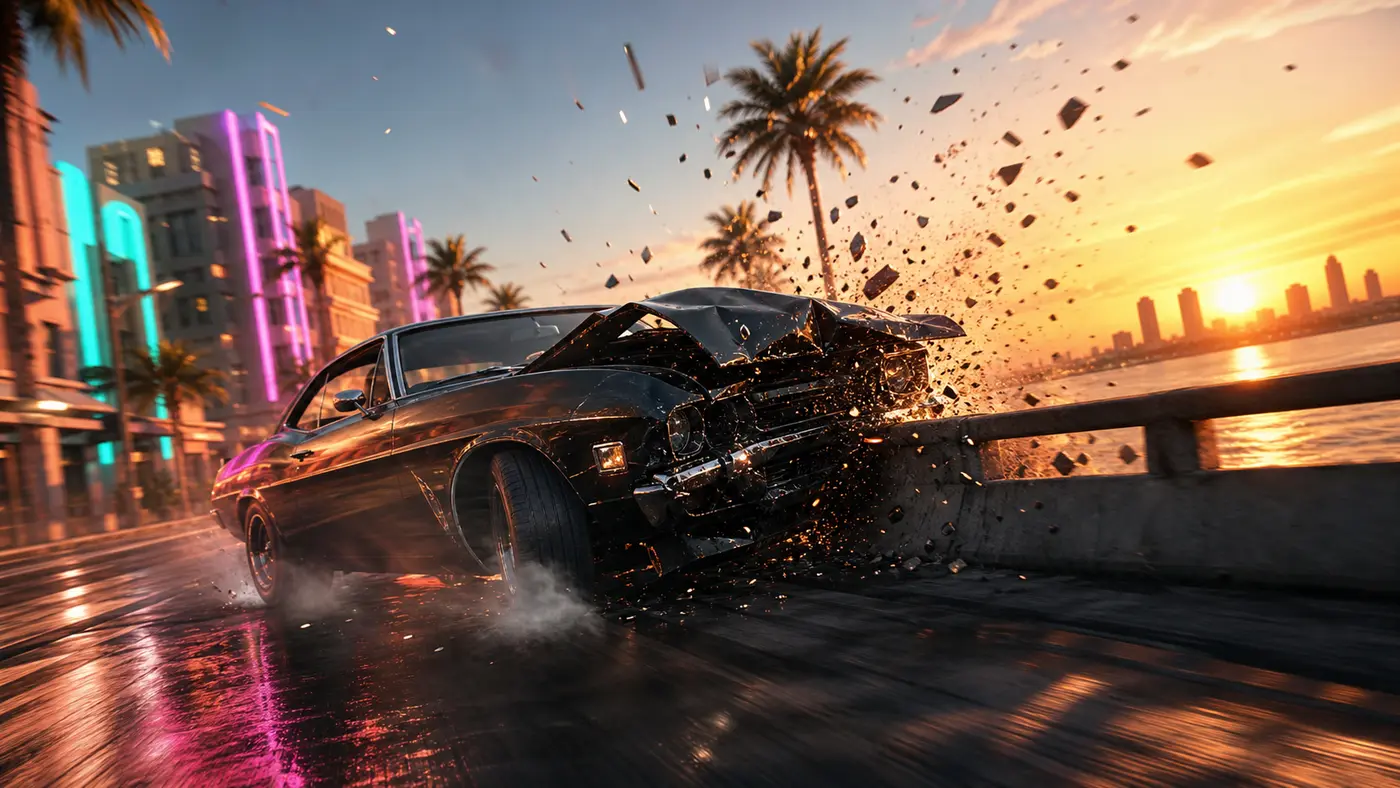
The best body physics ever seen in a GTA game dates back to 2008. Thanks to Euphoria, NaturalMotion’s tech, the NPCs in GTA IV staggered, grabbed at lampposts and soaked up every bullet in real time. GTA V dialed that magic way back. The question fans can’t shake heading into Grand Theft Auto VI: will the studio finally bring it back to life?
Let’s set the scope up front. We’re talking about body physics here, that famous ragdoll that makes a pedestrian you clip roll across the hood instead of dropping like a scripted puppet. Vehicle physics are a separate debate, one we already settled in our breakdown of GTA VI’s driving. Both run on the same engine, but you judge them in different places.
Euphoria made GTA IV’s bodies believable
In 2008, GTA IV became the first Rockstar game to ship with Euphoria, NaturalMotion’s animation engine. Its promise was radical for the time: instead of pulling from a library of pre-recorded animations, the game works out a character’s reaction on the fly. That technology, Dynamic Motion Synthesis, simulates a skeleton, muscles and a rough nervous system. A Niko Bellic shoved down a staircase doesn’t replay “fall animation number 7”: he tries to catch himself, tips over, cushions the landing with an arm, cracks into something.
The result stuck with an entire generation of players. An enemy shot in the leg crumples to one side, drags himself along, grabs a railing before letting go. Two identical hits never produce two identical falls. That grain of unpredictability, hailed as a small revolution, is what made GTA IV the absolute benchmark for ragdoll, a reputation that still holds today.

GTA V dialed Euphoria back, and purists never got over it
Five years later, GTA V keeps Euphoria but tones it down heavily. The reason is mundane: the game was born on the PS3 and Xbox 360, hardware from 2005-2006, and rolls out a map three times the size of Liberty City. There was no way to run a simulation that demanding everywhere without sacrificing the frame rate. So Rockstar sanded down the reactions, leaned on scripted transitions, calmed the bodies. Falls got cleaner, more readable, but also more predictable.
For anyone chasing raw sensation, it was a step back. The community never stopped pointing it out, mods in hand, and that frustration now fuels one of the most repeated requests aimed at GTA 6: give us back the old ragdoll. Rockstar, for its part, had already answered elsewhere. The first Red Dead Redemption (2010), then Max Payne 3 (2012) and above all Red Dead Redemption 2 (2018) pushed Euphoria far beyond GTA V. Here’s the through-line of the tech at the studio.
| Game | Year | Body physics (Euphoria) | Reputation |
|---|---|---|---|
| GTA IV | 2008 | Euphoria at full tilt, procedural reactions | Absolute ragdoll benchmark |
| Red Dead Redemption | 2010 | Euphoria extended to horses and duels | Falls and deaths praised |
| Max Payne 3 | 2012 | Euphoria paired with bullet-time | Studio's technical showcase |
| GTA V | 2013 | Euphoria reined in (PS3 and 360 constraints) | Seen as a step back |
| Red Dead Redemption 2 | 2018 | Rockstar's most advanced simulation | Peak of the genre |
| GTA VI | 2026 (expected) | Unknown, hints from the trailers | Peak anticipation |
A tasty detail for the connoisseurs: NaturalMotion moved into Zynga’s hands in 2014, for $527 million. Yet Rockstar kept using Euphoria long after that buyout, all the way to the peak that Red Dead Redemption 2 still represents. Proof that the studio is attached to this piece of tech, enough to never let it go despite the change in ownership.
What Trailer 2 hints at about GTA VI’s physics
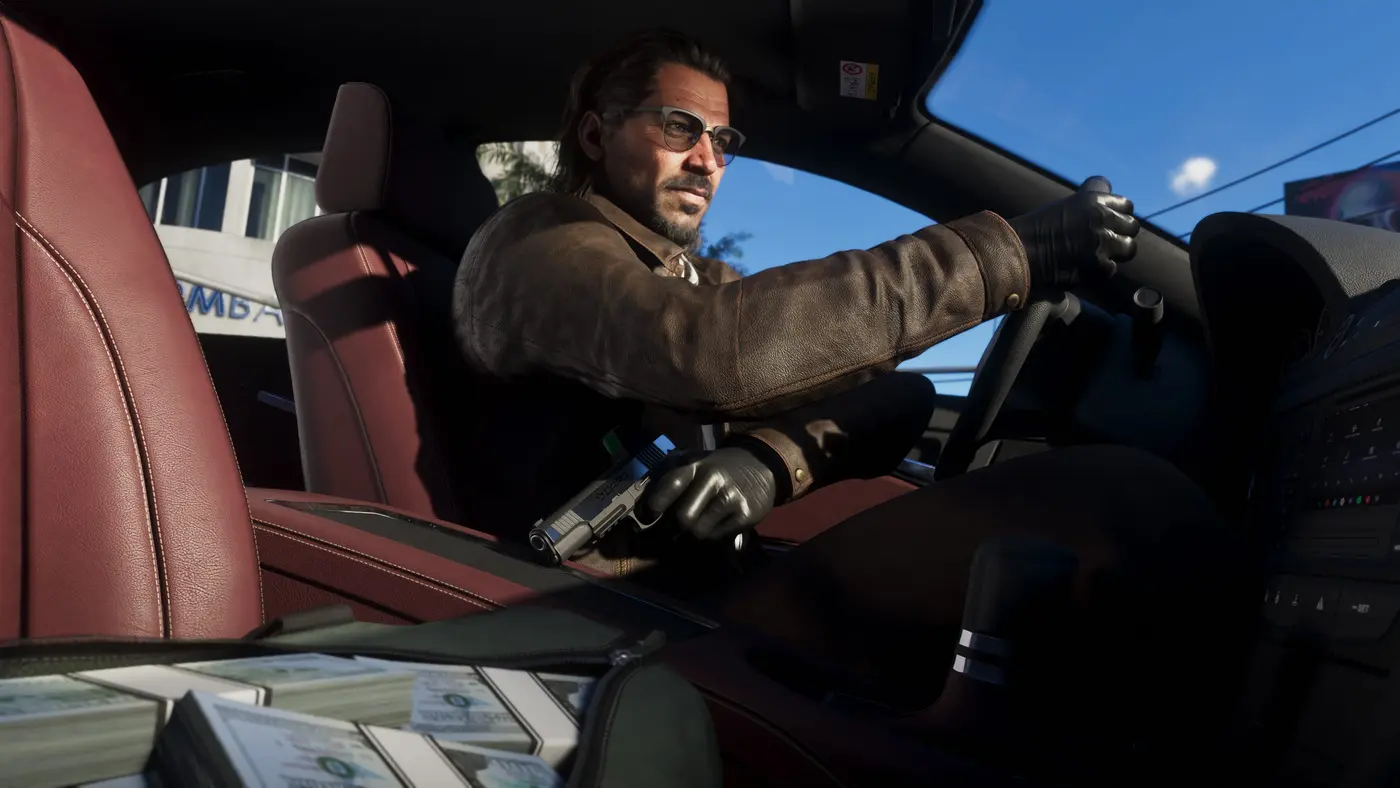
Rockstar hasn’t shown any raw gameplay, so everything starts from reading the trailers. The studio confirmed that Trailer 2 was captured entirely in-engine on a PS5, which lends weight to the exercise: what you see on screen is the engine, not a pre-rendered ad. Community analysts notably spotted signs of body-panel deformation on impact, a classic marker of well-crafted impact physics. File it under speculation, though: this is frame-by-frame reading, not a controller-in-hand demo.
Why the PS5 changes the game for ragdoll
The real reason for hope isn’t in a trailer, it’s in the silicon. If GTA V had to rein Euphoria in, it was for lack of power: every body simulated in real time costs computation. And GTA VI drops the previous-gen consoles and targets the PS5 and Xbox Series exclusively. With their modern processor, GPU and SSD, these machines finally offer the headroom the studio didn’t have in 2013. Less need to shave down the physics just to hold the frame rate.
Add the engine on top of that. GTA VI isn’t starting over from the 2013 base: it inherits a modernized RAGE, in the lineage of Red Dead Redemption 2, the most accomplished demonstration of Euphoria the studio has ever delivered. A horse collapsing in the mud, an outlaw clutching his gut before he drops: that maturity, applied to the crowds and shootouts of a city-state, is the scenario fans dream about. The usual unknown remains: until a controller has been plugged in front of us, we’re judging potential, not feel. To go deeper on the technical side, we broke down the RAGE engine’s feats and the leap over Red Dead Redemption 2.

We’ll know on November 19, 2026, not before. Until then, body physics remains GTA VI’s quietest but most scrutinized promise: the one that, more than the graphics, makes the difference between a world you watch and a world that reacts. To catch every beat of the countdown, keep an eye on our GTA 6 release date page.



Comments
Be the first to react.