
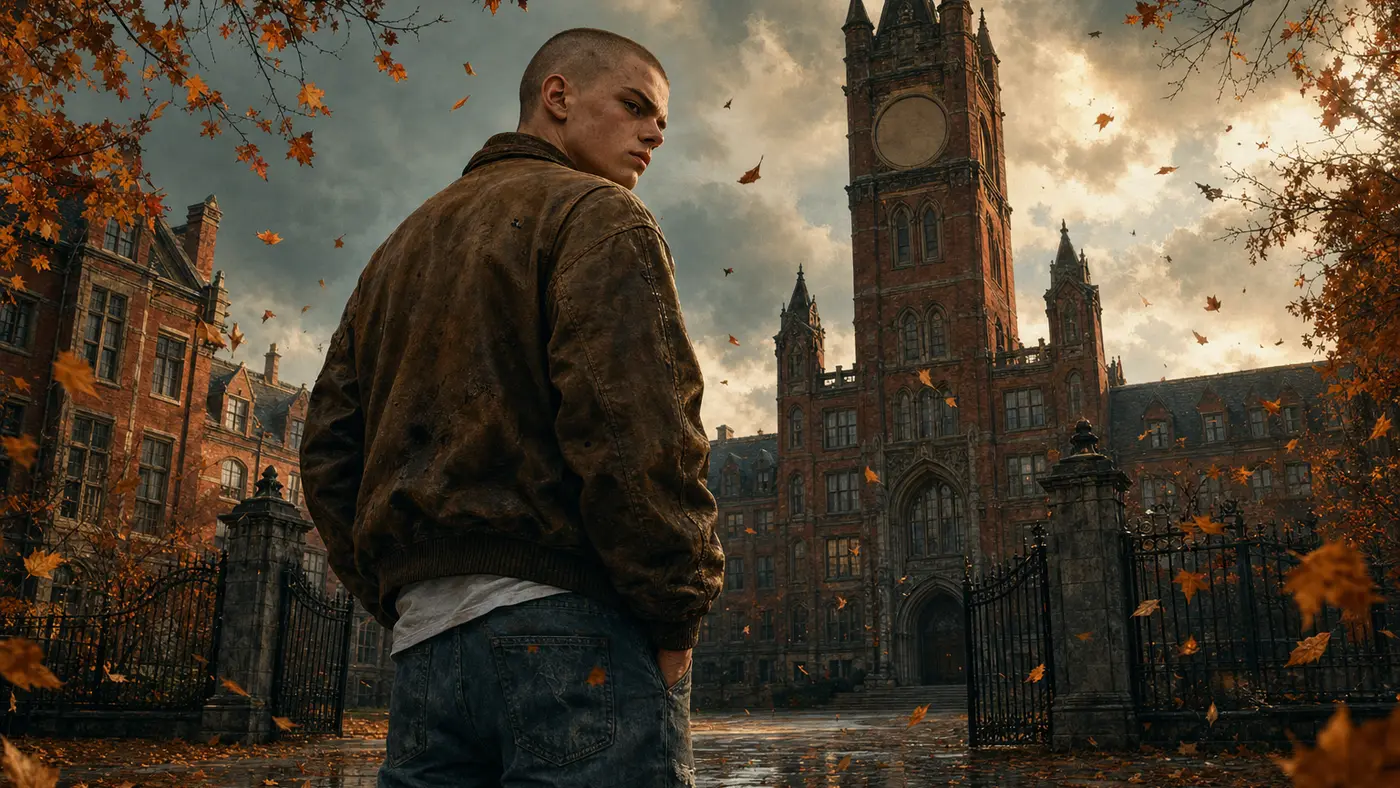
Released on October 17, 2006 on PlayStation 2, Bully (renamed Canis Canem Edit in Europe) is still one of the most endearing games Rockstar has ever put out. You steer Jimmy Hopkins, a rowdy teen, through a school year in a boarding school rotted by cliques, with no gun and no stolen car. Twenty years later, this cult classic still has no sequel.
A Pint-Sized GTA, With No Guns and No Cars
On paper, Bully is pure GTA-studio DNA: open world, biting humor, satire of America and freedom of movement. Except that Rockstar flips its own recipe on its head. Here, no guns, no cars to steal. You get around by bike, skateboard or scooter, and the arsenal boils down to a slingshot, firecrackers, stink bombs, itching powder and a few wooden bats. The target isn’t a rival gang but the hall prefect or the chemistry teacher.
That shift in setting, from organized crime to the schoolyard, changes everything. Bully is about adolescence rather than the underworld: the humiliations, the cliques, the first crushes, the authority you taunt. It’s a miniature GTA where the goal isn’t to run a city but to survive high school.
Bullworth Academy: An Open-World School Year
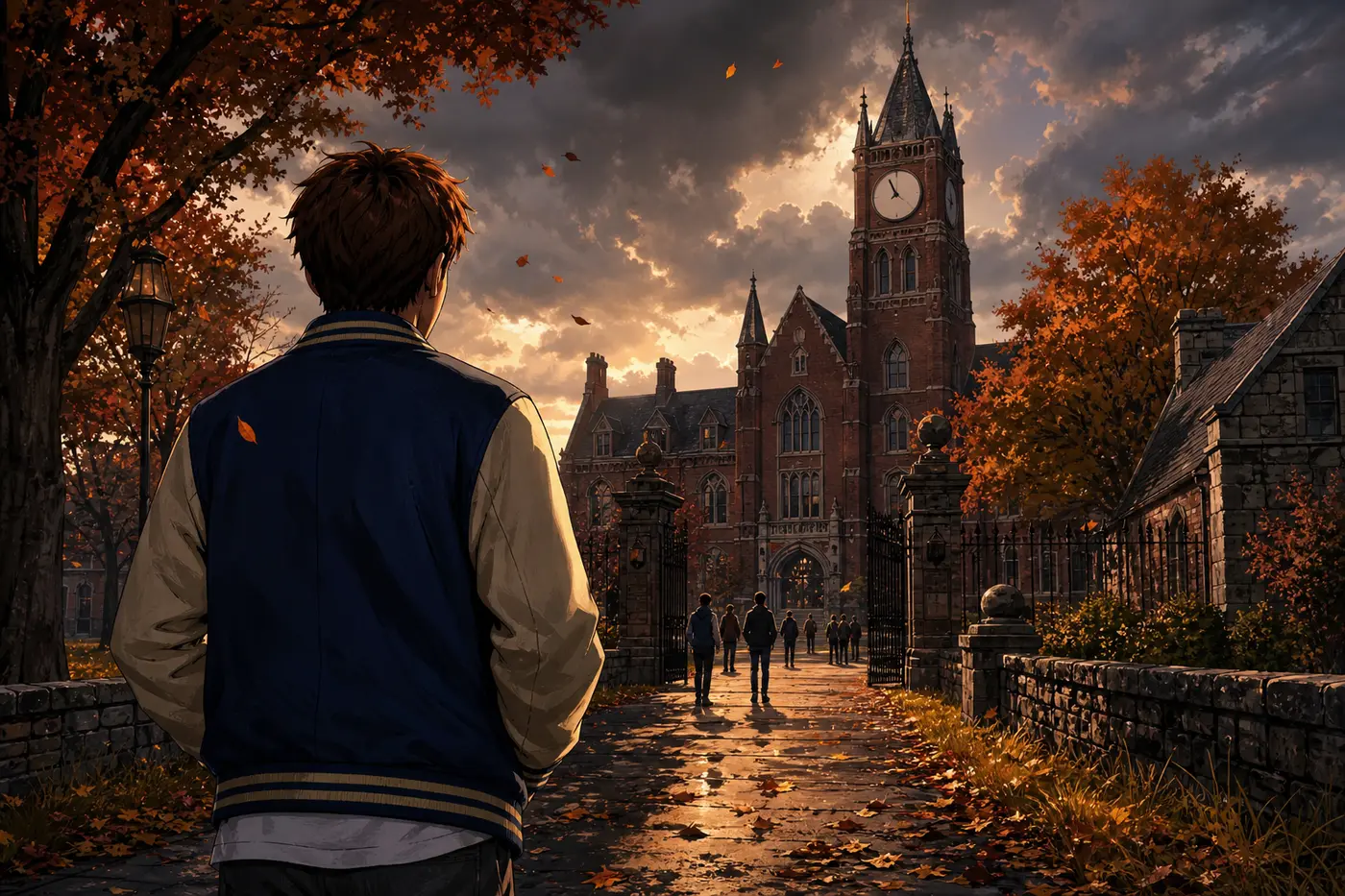
The playground is Bullworth Academy, a red-brick Gothic boarding school planted in a small New England town, complete with dorms, a cafeteria, an observatory and the surrounding town. The world runs on a class schedule: bells between periods, an evening curfew, prefects who patrol and slap you with detention if you wander around in your pajamas in broad daylight. The seasons roll by across the five chapters, from the fall term to the end of the year.
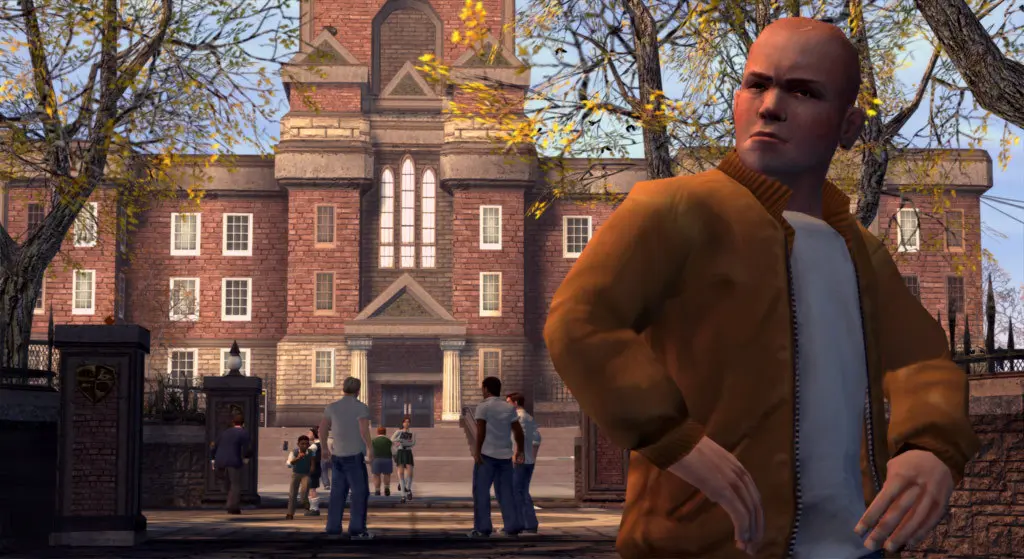
From day one, the game leaned on this American-campus atmosphere, at once familiar and unsettling, as the period trailer released by the studio makes clear.
Cliques, Classes and a Slingshot: The Heart of the Gameplay
Bully’s big idea is its clique war. Bullworth’s cast splits into rival factions, each with its own turf, its own look and its own leader, that Jimmy has to win over or take on one by one. It’s the school-hallway version of the GTA San Andreas gangs, in blazers and sports caps.
| Clique | Style | Turf at Bullworth |
|---|---|---|
| The Bullies | Schoolyard thugs | Dorms and main courtyard |
| The Nerds | Astronomy club, bottle rockets | Library and observatory |
| The Preppies | Rich kids, boxing, the Aquaberry brand | Old Bullworth Vale |
| The Greasers | Rockabilly, grease monkeys, souped-up bikes | New Coventry |
| The Jocks | Football, muscle | Stadium and gym |
| The Townies | Dropouts, off-campus | Abandoned industrial zone |
The other clever touch is the classes reworked into mini-games with real rewards. Sitting through English class (letter-scramble puzzles) unlocks new insults and excuses to sweet-talk the prefects; Chemistry lets you craft firecrackers and bottle rockets; Gym teaches new fighting moves; Geography reveals the map. Skipping class has a cost, showing up makes Jimmy stronger: a smart loop that roots the player in everyday school life.
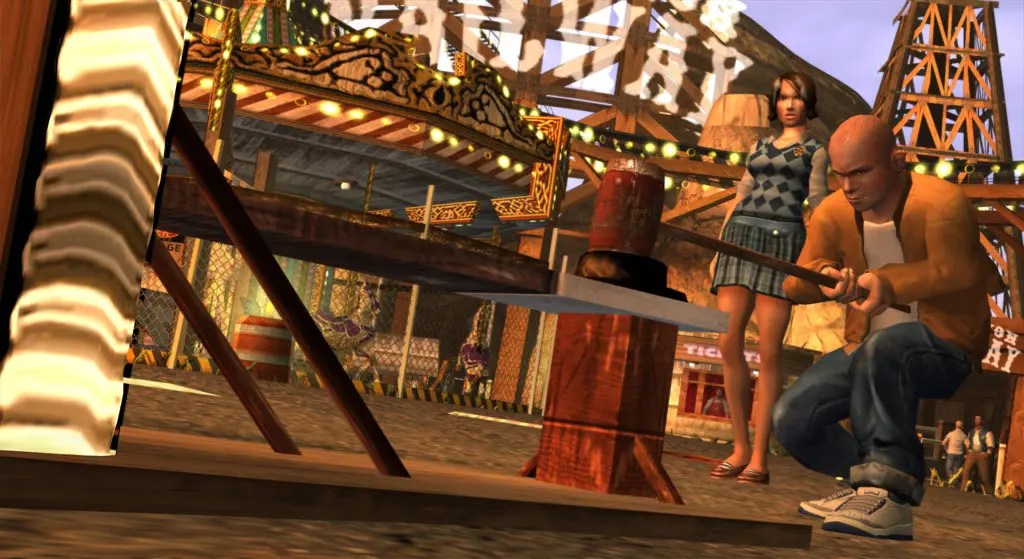
Around it, the town offers the typical Rockstar filler: bike and go-kart races, a paper route, lawn-mowing, carnival games, barbershops and clothing stores to give Jimmy a makeover. Enough to fill a whole year between scripted missions.
Canis Canem Edit: The Name That Hid the Controversy
Back in 2006, the single word “bully” was enough to light the fuse. In Europe, Rockstar chose to release the game under the Latin title Canis Canem Edit, “dog eat dog,” to defuse accusations that it glorified school bullying.
In the United States, anti-video-game attorney Jack Thompson went on the offensive before the game even launched, branding it a “Columbine simulator” and suing Take-Two in Florida. Judge Ronald Friedman, of the Miami-Dade court, had the game demonstrated in his courtroom, then dismissed the complaint: he found that Bully exposed players to less violence than a TV show. Fed up with Thompson’s behavior during the hearing, the judge later recused himself and reported his conduct to the Florida Bar. The controversy, for its part, mostly handed the game a windfall of free publicity.
A Game Smarter Than It Looked
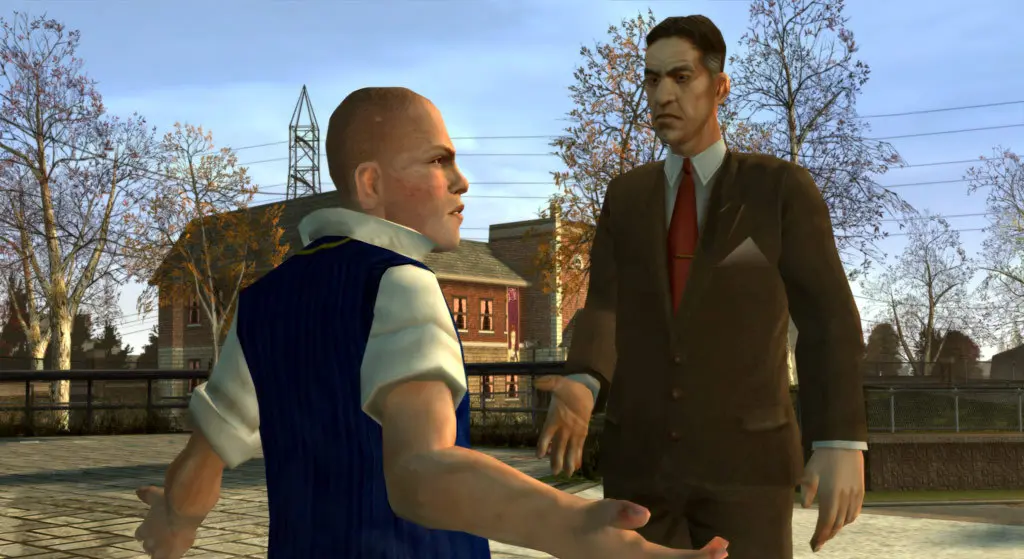
Behind the provocative front, Bully hid a real point of view. Bullying is shown from the side of the kid who suffers it as much as the kid who dishes it out, and the game is no mindless punching bag. A rare touch for a big 2006 production: Jimmy can kiss girls and boys alike, a freedom praised at the time by parts of the press and one that, years later, landed the character on lists of notable LGBT figures in video games.
The soundtrack, by Shawn Lee, does a lot for that charm: a jazzy, orchestral score, twice nominated for best original music, that gives Bullworth its bittersweet-comedy flavor. The result won over critics, with an 87 out of 100 on Metacritic for the PS2 version, and players, with more than 1.5 million copies sold. A year and a half later, Bully: Scholarship Edition (2008) added classes, missions and characters on Xbox 360, Wii and PC, extending the game’s life well beyond the PlayStation 2.
Why Bully Never Got a Sequel
That’s the paradox of this classic: beloved, held up as a model, yet orphaned. The studio that created it, Rockstar Vancouver, was absorbed into Rockstar Toronto in 2012, shortly after Max Payne 3 shipped, and some of that in-house expertise scattered. Since then, the publisher has concentrated its strength on its two juggernauts, GTA and Red Dead Redemption.
A Bully 2 did exist, though, at least on paper: multiple accounts describe an advanced prototype, never announced or released, one of Rockstar’s great ghost games. While we wait on Jimmy’s hypothetical return, the first Bully remains a centerpiece of the studio’s “non-GTA” catalog, sitting alongside Manhunt, L.A. Noire and the other Rockstar gems. Proof that, even without a single gun, the studio already knew how to tell you everything about a world, even one shrunk to the size of a schoolyard.
Comments
Be the first to react.